




Most rifle hunters spend more time second-guessing their ammunition than actually shooting it. There’s always a newer load promising flatter trajectories, deeper penetration, or more consistent expansion, and that noise makes it easy to forget what actually matters in the field.
A smart hunting ammunition strategy isn’t about finding the “best” load in the abstract. It ties one proven round to a specific rifle, the game being hunted, the expected shooting distance, and the realistic abilities of the shooter. That combination matters far more than what any product description says.
The foundation comes down to three things: confirmed rifle accuracy with the chosen load, a dialed-in rifle zero that reflects actual field conditions, and enough rifle practice with that same ammunition to shoot it confidently. Switching loads constantly undermines all three. When preseason practice happens with one round but hunting season starts with another, the data collected during preparation becomes unreliable. Narrowing the choice early, then committing to it through practice, is what separates a workable ammunition plan from one that looks good on paper but falls apart at effective range.
What a Smart Ammo Plan Looks Like
A smart ammunition plan isn’t built around what’s popular or what performed well in a magazine review. It’s built around fit: the right load for the rifle, the game, the distance, and the shooter pulling the trigger.
The first priorities are:
- Reliable rifle accuracy with the chosen load confirmed at the range
- A verified rifle zero that reflects real field conditions, not just bench performance
- Consistent rifle practice with the same hunting ammunition intended for season use
Narrowing choices early matters because it keeps preseason rifle practice honest. Every session with the same round reinforces holdovers, recoil management, and point-of-impact expectations. Constant switching between loads erodes all of that. Consistency, not variety, is what builds confidence before opening day.
Choose Ammo Around Game and Real Distance
Ammunition marketing leans hard on velocity numbers and expansion claims, but neither of those tells a hunter whether a bullet will perform correctly on the specific animal they’re chasing at the distance they’re actually shooting. Narrowing the choice means filtering by two things first: what the bullet needs to do at impact, and how far the hunter can honestly make that shot.
When comparing what’s actually available in the loads worth testing, the crew at Ammo To Go offers useful market visibility for seeing which rifle loads are in stock across calibers, which helps balance ideal bullet design against real shelf availability before range testing begins.
Match Bullet Design to the Animal
Bullet construction drives terminal performance more than any other variable. Bonded bullets like the Federal Terminal Ascent hold together under high-velocity impact and are well suited for larger-bodied game where deep, controlled penetration matters. Monolithic designs like the Barnes TSX retain almost all their weight and expand reliably across a wide velocity range, making them a strong option when hunters might encounter variable shot angles or tougher animals.
Fast-expanding options like Winchester Deer Season XP are built for quick energy transfer on whitetail-sized game at moderate distances. They work well within their intended range, but can shed weight quickly at close range or fragment before reaching vitals on heavier animals.
For more on understanding how bullet construction varies, the differences between designs become clearer when viewed alongside real impact data rather than spec sheets alone.
Be Honest About Your Effective Range
Bullet weight and construction also shape how far a load stays reliable. Heavier bullets in a given caliber generally retain velocity better and resist wind drift, but those ballistic advantages only matter if shot placement holds at that distance.
Effective range isn’t the distance a bullet can travel. It’s the farthest shot a hunter can make while still guaranteeing ethical shot placement on the intended kill zone, under field conditions, not from a bench.
Long-range shooting demands more practice, not just flatter ammunition. Hunters who stretch their effective range beyond what their practice supports create unnecessary risk, and no bullet design compensates for that gap.
Run a Preseason Test Before You Commit
Settling on hunting ammunition after a single range session is one of the more common mistakes hunters make. A real preseason test takes more than one trip, but it produces something far more valuable: a single load that a hunter trusts, understands, and can shoot accurately when it counts. The sections above on bullet design and effective range should already have narrowed the field considerably, which makes the testing process much more focused.
Start with a Small Set of Serious Candidates
Rather than running every available load through the rifle, hunters get better results by narrowing the field before testing begins. Two or three loads that already meet the game, distance, and twist rate requirements are enough to work with.
A practical protocol looks like this:
- Fire fouling shots to clear residue from a clean bore and stabilize conditions
- Shoot three-to-five shot groups, then allow the barrel to cool completely between strings
- Repeat across multiple sessions to confirm consistent rifle accuracy under repeating conditions
Calibers like the 6.5 Creedmoor and 300 Win Mag both have enough published bullet stability research available that hunters can cross-reference their rifle’s twist rate against bullet weight before ever reaching the range, which helps eliminate poor-fit candidates early.
Track the Results That Matter in the Field
Group size from a bench is only one piece of the picture. A load that prints tight from a rest but shifts point-of-impact from field positions, feels uncontrollable under recoil, or fails to feed reliably from the magazine is not a finished choice.
Testing should include shooting from sitting, kneeling, and supported field positions in addition to bench work. Hunters should log every string with consistent notes: group center, felt recoil, feeding behavior, and any point-of-impact shift across positions.
Those notes become the season dope card. After testing, committing to one load means that every subsequent rifle practice session reinforces the same holdovers and recoil pattern, which is where real field confidence comes from.
Confirm Zero and Build Your Field Data
Once a load passes the preseason test, confirming a clean rifle zero with that exact hunting ammunition is the next step. Not a similar load from the same manufacturer, not last season’s leftover box, but the same round that will be in the chamber on opening day.
From that confirmed zero, building a simple bullet drop chart removes guesswork when distance matters. The chart should reflect realistic hunting yardages rather than theoretical ceilings. For most hunters, that means charting drop at 100, 200, and 300 yards, then stopping where rifle practice and honest effective range data say the shooting becomes unreliable.
That chart means little, however, if the holds behind it were only verified from a bench. Hunters should confirm point-of-impact from sitting, kneeling, and supported field positions before considering the zero final. These are the same positions logged during the preseason test, so the process should feel familiar by this point.
The rifle, optic, and season load function as one system. Switching any element resets the data, which is why keeping all three constants locked through the season protects everything collected during preparation.

Plan for Cost and Availability Before Season
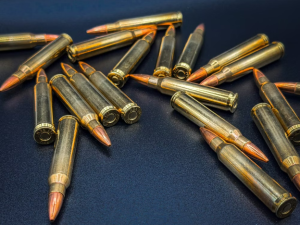
A solid ammunition plan built around rifle accuracy can still fall apart if the same load isn’t available in quantity when the season approaches. Buying enough of a confirmed hunting ammunition load to cover zeroing, rifle practice, and the season itself at once removes that risk entirely.
Switching to a different lot or a fallback load late in preparation is only acceptable if there’s time to retest from scratch. Point-of-impact can shift between production lots, and any new round needs the same verification process the original load went through.
Premium loads perform well but aren’t always easy to source in volume. As part of broader pre-season gear and trip planning, hunters should confirm availability early and store the season supply in a cool, dry location to preserve consistency across every range session and field use.
Make One Choice and Learn It Well
The smartest hunting ammunition strategy comes down to four things: finding a bullet that fits the game and distance, testing it honestly, confirming rifle accuracy with a clean zero, and then repeating that same system until it becomes second nature.
Confidence in the field doesn’t come from owning the newest load. It comes from shooting one proven round enough times to know exactly how it behaves under pressure, from every position, at every realistic yardage.
Endless tinkering right before season trades hard-won practice data for uncertainty. A smaller, deliberate system built around one confirmed load protects every ethical shot a hunter has prepared for.