






Caution: This is general information and does not constitute medical advice. If you have any concerns, call 911 or contact the Poison Control Center at 1-800-222-1222.
Ask any bowhunter about the worst week of their season. Many will describe not a missed shot, but a rash. Indeed, after hours spent kneeling in dense thickets, you might experience itching or an allergic reaction. This raises the obvious question: how to identify poisonous plants when you’re in the weeds?
The short answer: four signs do most of the work. Leaves in groups of three, stems with purple spots, milky sap, and fine stinging hairs. Memorize these, and you’ll be able to trudge along the stream bottom without doubting every branch. Let’s check more on each below, along with first aid instructions in case of contact.
How to Know If a Plant is Poisonous
Botanists determine the toxicity of plants by examining flower parts and leaf margins. In the woods, you don’t have that much time. You need a short list of warning signs that are constantly present. Here is how to know if a plant is poisonous and what to look for:
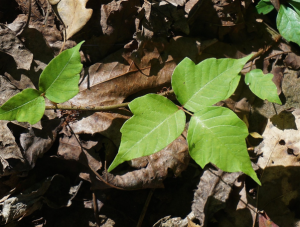
- Leaves in groups of three. Poison ivy, poison oak, and the entire family have leaflets arranged in groups of three, with the middle leaflet on a longer stem than the neighboring ones. This detail distinguishes ivy from harmless, similar plants, such as box elder seedlings.
- Milky sap. Break the stem and examine the cut surface. A white mucilage indicates the plant is chemically combating its toxicity. Euphorbia and dogbane exude sap in this way.
- Fuzzy stems. These hairs act like glass needles filled with formic acid. Nettles shoot out stinging nettles as soon as you brush against them.
- Firewood. Every fall, people are hospitalized because of this. Burning poison sumac or ivy releases urushiol into the smoke. Inhaling enough of this substance can cause the airways to constrict. Don’t use unknown fallen trees or hairy vines to start a fire.
One sign by itself doesn’t prove anything. Two or three combined are usually enough for a definitive identification.

How to Test a Plant for Toxicity
Never taste, chew, or rub an unknown plant to see what happens. This old universal edibility test does nothing to identify a poisonous plant but can harm you instead.
No one sells field toxin detection kits. Confirmation occurs only with your eyes and a reference sample. You should perceive any unfamiliar poison plant as a live wire until something tells you otherwise. Four things that really work:
- Photo ID apps. Take a clear photo of a leaf, stem, and overall growth of the plant. Software solutions from Botan App Limited compare this image to a plant database and show you species that are toxic to people and pets.
- Regional field guide. A field guide specific to your state will quickly narrow down the list of potential candidates.
- Extension service fact sheets. Almost every state-funded university publishes local PDFs of noxious weeds with seasonal photos.
- Poison Control Center. You can describe what you see over the phone. This line operates 24/7 in all 50 states.
The most reliable criterion is when two independent sources point to the same name.

Different Types of Poisonous Plants
Grouping different types of poisonous plants by their effects on the body speeds up response to an emergency. Contact and ingestion of poisonous substances are completely different issues. The same applies to sun-activated substances, which catch people unaware. Here are the most common types:
- Contact irritants. Urushiol or acid comes into contact directly with bare skin. Poison ivy falls into this category in most parts of the country. A plant with poisonous leaves, like this one, causes an itchy rash within a few hours or even a few days.
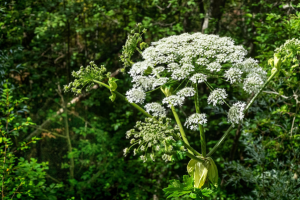
- Phototoxic species. The sap of the Giant hogweed remains inert until exposed to ultraviolet (UV) light. Blisters appear as soon as the sun comes out.
- Systemic toxins. Poison hemlock is a relatively mild skin irritant. However, ingesting a small amount can cause respiratory arrest in an adult.
Depending on the category you must decide what to do first — wash it off, get out of the sun, or just never put it in your mouth.
Pictures of Poisonous Plants and Matching Identification Charts
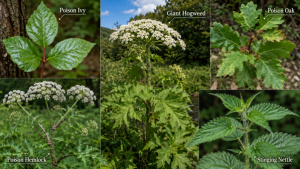
When preparing for the upcoming bowhunting season, it’s important to first familiarize yourself with the list and photos of wild plants in your area. Find pictures of poisonous plants for your county and remember them. The five species listed below cover most of what a bowhunter might encounter.
| Species / Plant Name | Key Leaf Profile | Stem Characteristics | Skin Contact Reaction | Worst-Case Scenario |
| Poison Ivy | Three leaflets and pointed tips | Vine-like and woody stems | Intense itching and red blisters | Severe allergic systemic reaction |
| Poison Oak | Three leaflets and scallop-edged | Low shrub and tiny fine hairs | Red and bumpy oozing rashes | Blisters spreading across limbs |
| Giant Hogweed | Massive and deeply creased lobes | Thick, hollow and purple spots | Phototoxic blistering burns | Permanent scarring and blindness |
| Poison Hemlock | Separated lace-like leaves | Smooth and purple-splotched | Mild irritation on raw skin | Fatal systemic paralysis if ingested |
| Stinging Nettle | Oval-shaped with jagged teeth | Covered in fine rigid hairs | Instant burning, hives and welts | Severe pain lasting up to 24 hours |
There are regional differences worth knowing. Western poison oak grows into head-high thickets out on the coast. The eastern version stays low and shrubby. Giant hogweed can be mostly found in the Northeast and the Pacific Northwest.

Emergency First Aid for Accidental Contact in the Woods
Sooner or later, you can contact a poisonous species. Here is what to do after you brush a plant that burns your skin:
- Move away from the area of contact and keep dirty hands away from your face.
- Rinse with cold water, as heat opens pores and allows the oil to penetrate deeper.
- Wash your hands with dish soap or Tecnu, rinsing constantly to prevent drying.
- Clean under your fingernails with a stiff brush, where urushiol can remain active for several hours.
- Pack your clothes in bags and seal them, as the oil remains active for years.
- Wipe your gear such as limbs, riser, release aid, and boots with rubbing alcohol.
- Monitor your breathing and treat facial swelling as a need for an emergency room visit.
Cold compresses and calamine lotion can help relieve itching at home. The FDA also offers effective tips for dealing with the effects of poisonous plants.
Conclusion
Is this plant poisonous? is a question you’ll ask yourself a dozen times a season. Answering it takes about ten seconds once those four red flags appear in your head. Do the county homework in August, back when you’re glassing beans and killing time. It’s much better than wasting time trying to recognize a plant while bowhunting.