








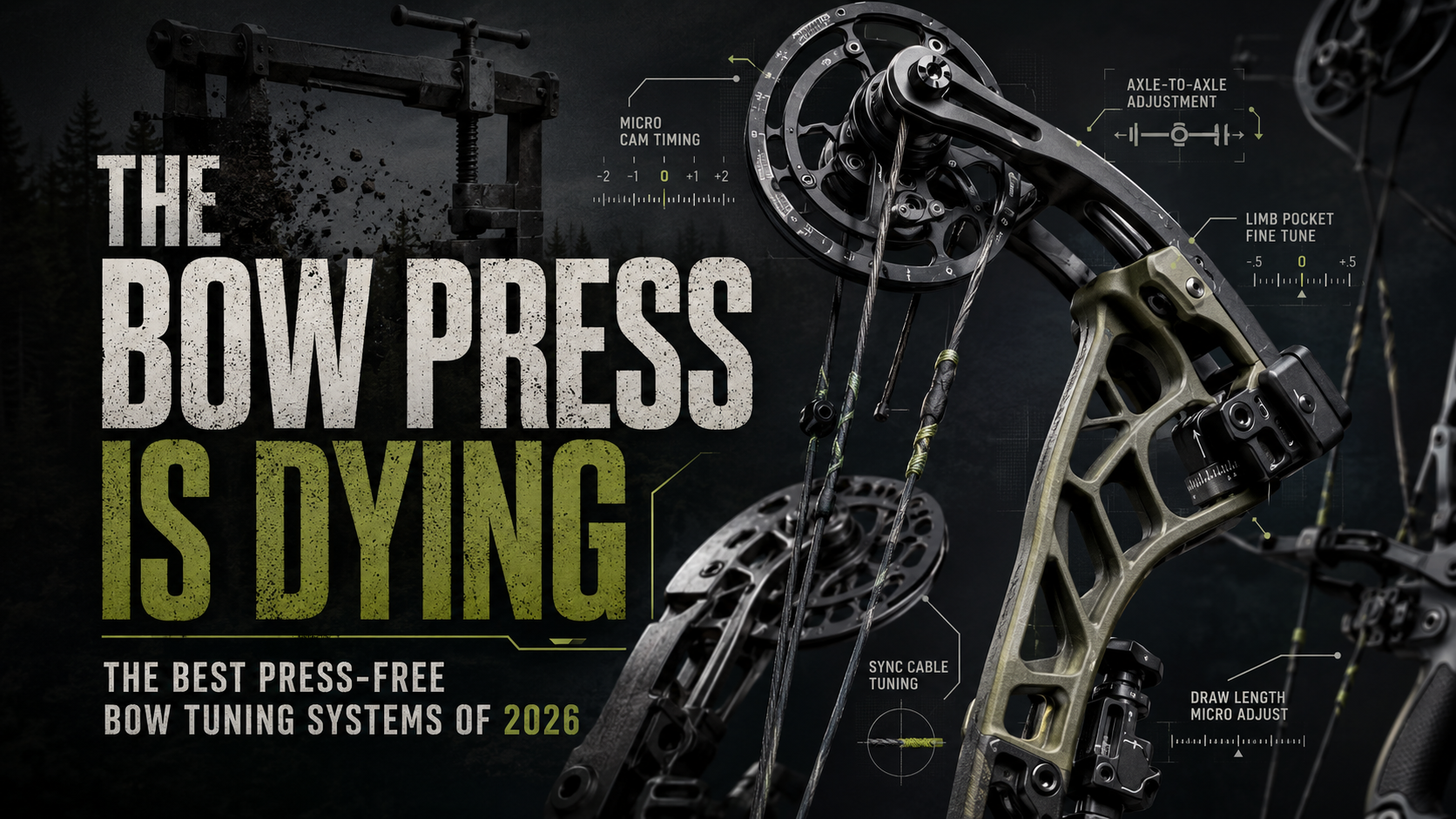
Compound-bow tuning used to be a job most bowhunters left to a professional shop.
You could make small adjustments to the arrow rest at home, but a stubborn paper tear often meant putting the bow into a press, moving spacers, twisting cables, adjusting yokes or changing cam lean. Without the correct equipment and experience, there was only so much tuning the average bowhunter could safely perform.
That is no longer true with many of today’s flagship hunting bows.
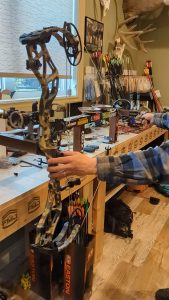
Manufacturers including Hoyt, Mathews, Bowtech and Elite have developed systems that allow bowhunters to change the relationship between the cams, limbs and arrow path without placing the bow in a press. PSE has taken a slightly different approach with a snap-spacer system that still involves a press but dramatically reduces the time and disassembly traditionally associated with spacer tuning.
These systems do not eliminate the need for a good archery technician. They also cannot correct poor shooting form, an improperly spined arrow or every cam-timing problem. What they can do is give bowhunters considerably more control over paper tuning, bare-shaft tuning and broadhead flight.
The traditional bow press is not dead. However, its role in routine compound-bow tuning is clearly getting smaller.
Our Picks at a Glance
Hoyt XTS Tuning System
The broadest system here, with independent adjustments intended to correct high, low, left and right paper tears.
Mathews Limb Shift Technology
A clean continuous adjustment that changes limb-channel width while the cam remains in a fixed position.
Bowtech DeadLock
Moves the cams laterally along the axles, then locks the selected position into place.
Elite S.E.T. Technology
Changes the limb-pocket pivot angle to influence cam lean and the bow’s lateral centershot relationship.
PSE EZ.220 Snap Spacer System
Uses snap-in spacers for precise cam-lean changes with less press time and disassembly.
Press-Free Bow Tuning System Comparison
The systems pursue the same basic goal—cleaner arrow flight—but they change different parts of the bow. That distinction matters when deciding which adjustment style will be easiest for you to understand and repeat.
| Award | System | What It Adjusts | Primary Focus | Press Needed? | Tools | Compatible Bow Examples |
|---|---|---|---|---|---|---|
| Best Overall | Hoyt XTS | Load through upper and lower limb pockets | Horizontal and vertical tears | No | Single hex key | Alpha AX-3, Carbon RX-10 and Alpha AX-90 |
| Best Continuous Micro-Adjustment | Mathews Limb Shift | Limb-channel width and limb balance | Primarily lateral tuning | No | Wrench | LIFT RS, LIFT XD, LIFT X and TITLE |
| Best Direct Cam Adjustment | Bowtech DeadLock | Lateral cam position on the axles | Left and right tears | No | Allen wrench | Alliance, Alliance 33 and Virtue |
| Best Limb-Pocket System | Elite S.E.T. | Limb-pocket pivot angle, cam lean and centershot | Primarily lateral tuning | No | 5/32-inch hex key | Varos, Carbon EON and Allure |
| Best Press-Reduced System | PSE EZ.220 | Cam lean through snap spacers | Precise lateral correction | Reduced press time | Press plus installation tools | Decree FDS, Force DS, Sicario Carbon and Mach DS |
What Do Press-Free Tuning Systems Actually Change?
The purpose of bow tuning is to align the force generated by the bow with the path of the arrow. When an arrow leaves the string with its point and nock traveling in different directions, it produces an imperfect hole through paper. The direction of that tear helps identify the adjustment that may be necessary.
The first step is usually to establish a reasonable starting position for the arrow rest and nocking point. Small rest adjustments are normal. Problems arise when a shooter continues moving the rest farther and farther from its ideal position in an attempt to compensate for the bow’s power path.
Rather than forcing the arrow rest to compensate for the bow, these systems adjust the bow itself.
Press-Free Does Not Mean Maintenance-Free
A press-free tuning system should not be confused with a completely press-free bow. These technologies primarily reduce the need to press a bow while correcting arrow flight.
What Owners Can Often Adjust
- Left or right paper tears
- Broadhead and field-point alignment
- Bare-shaft flight
- Tune checks after travel or accessory changes
What May Still Require a Press
- Replacing strings, cables, cams, bearings or axles
- Installing or changing some peep sights
- Correcting timing that cannot be adjusted externally
- Servicing limb-pocket components or conventional spacers
Some Bowtech bows go farther by combining DeadLock cam adjustment with the company’s no-press TimeLock timing system. Even then, a press remains necessary for major service and component replacement.
How to Choose a Press-Free Bow Tuning System
Consider What the System Can Correct
Most systems concentrate on left-and-right tuning. Hoyt XTS is the exception in this comparison because it provides separate adjustments for lateral and vertical tears. That broader correction range may appeal to an archer who wants maximum control, although rest height, nocking-point position, cam timing and shooting form should still be examined before making major limb-pocket changes.
Look at How the Adjustment Is Made
None is automatically superior simply because it moves a particular component. The more useful questions are whether the adjustment is precise, repeatable and easy for the owner to understand.
Check for Reference Marks
Reference marks allow the shooter to record the original setting, track each change and return the bow to a previous position. Hoyt uses machined gradation lines, while the redesigned Bowtech DeadLock system includes laser-etched reference marks. These features reduce guesswork and encourage controlled testing rather than random adjustment.
Think Beyond Initial Paper Tuning
A bow may produce a clean paper tear and still require additional work before hunting season. Consider how easily the system can be used during:
The greatest value often appears during broadhead tuning. A small bow adjustment can bring broadheads and field points together without pushing the rest excessively to one side.
Understand That These Systems Are Bow-Specific
Most of these technologies are integrated into specific bows and cannot be universally added to an older compound. In practical terms, choosing a tuning system is often part of choosing your next bow. Evaluate the entire platform—including draw cycle, grip, speed, stability, weight and fit—rather than purchasing a bow solely because of its tuning mechanism.
Buyer Shortcut
Which System Best Fits Your Priorities?
How We Evaluated the Best Bow-Tuning Systems
This is a technology comparison, not a timed hands-on shootout. The systems were evaluated through their published mechanical designs, adjustment capabilities and current manufacturer instructions. We did not assign numerical scores or claim that every system was tested on an identical shooting platform.
The Best Press-Free Bow Tuning Systems of 2026
Each system changes a different mechanical relationship. The best choice depends on whether you value maximum correction range, continuous movement, direct cam positioning, limb-pocket control or faster spacer tuning.
Best Overall
Hoyt XTS Tuning System
Most modern tuning systems focus on one axis. They allow the archer to move the cam or change the limb relationship to correct a left or right tear. Hoyt took a broader approach with XTS.
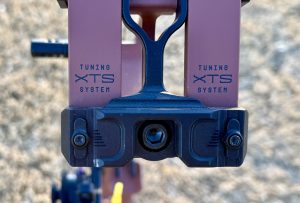
The system is integrated into the limb pockets of the company’s 2026 flagship bows. The bottom pocket controls lateral correction, while the top controls vertical correction. The two can be adjusted independently or simultaneously with a single hex key.
As the tuning screw is rotated, an internal wedge changes the load being carried by the limb. The adjustment alters the bow’s power path without requiring the owner to move spacers or push the arrow rest far from a sensible centershot position. Learn more in our Hoyt Alpha AX 33 Review.
Reasons to Choose It
- Corrects on two axes
- Independent upper and lower adjustments
- Single-tool operation
- Reference marks support repeatability
- No press for ordinary tuning
Reasons to Consider
- Integrated into specific Hoyt bows
- Vertical tears still require proper diagnosis
- Does not replace timing or major service
Compatible Bows
Current Hoyt model variants confirmed by Hoyt to use the XTS Tuning System, click each bow to shop the bow:
Best Continuous Micro-Adjustment
Mathews Limb Shift Technology
Instead of moving a cam along its axle or swapping spacers, Limb Shift changes the relationship between the limbs. That gives the archer a smooth adjustment path for lateral tuning without repeatedly disassembling the cam stack.
The appeal is controlled movement. A shooter can make a small adjustment, shoot through paper, record the result and continue in measured steps. That makes the system especially attractive during broadhead tuning, when subtle lateral changes may be enough to bring field points and broadheads together.
Reasons to Choose It
- Continuous micro-adjustment
- Cam remains fixed
- No spacer swapping
- No press for lateral tuning
Reasons to Consider
- Primarily focused on lateral correction
- Only available on compatible Mathews platforms
- Cannot correct form or arrow-spine problems
Compatible Bows
Current Mathews product pages that explicitly list Limb Shift Technology:
Best Direct Cam Adjustment
Bowtech DeadLock Technology
For many bowhunters, DeadLock makes immediate mechanical sense: loosen the lock, move the cam in the direction needed to influence the tear, test the bow and secure the setting. The adjustment works on the component archers traditionally repositioned through spacer tuning, but without taking the bow apart.

The redesigned system’s reference marks make it easier to track each movement and return to an earlier position. On bows that also include TimeLock, owners gain additional no-press control over routine timing adjustments.
Learn more in the Bowtech Alliance 33 Review.
Reasons to Choose It
- Direct, easy-to-understand cam movement
- No spacer changes
- Reference marks improve repeatability
- TimeLock available on some bows
Reasons to Consider
- Primarily a lateral tuning system
- Adjustment must be locked securely
- Bow-specific technology
Compatible Bows
Current Bowtech models whose official product pages list the full DeadLock Cam System:
Best Limb-Pocket System
Elite S.E.T. Technology
S.E.T. takes a different route than direct cam movement. The adjustment occurs at the limb pocket, changing how the limb and cam system relate to the riser. That allows the owner to influence a left or right paper tear while keeping the arrow rest closer to its intended position.
The system is compact, integrated into the bow and operated with a 5/32-inch hex key. It is a strong option for archers who like limb-pocket-based tuning and want to avoid disassembling the cam stack.
Reasons to Choose It
- Integrated limb-pocket design
- No cam-stack disassembly
- One common hex-key size
- No press for routine lateral tuning
Reasons to Consider
- Primarily addresses lateral tuning
- Changes should be made incrementally
- Limited to compatible Elite bows
Best Press-Reduced System
PSE EZ.220 Snap Spacer System
PSE retains the familiar logic of changing cam lean with spacers, but replaces a more involved tear-down with snap-in components sized in 0.020-inch increments. That gives technicians and experienced owners a precise, repeatable way to make lateral corrections.

The distinction matters: this is a press-reduced system, not a no-press system. It will appeal most to archers who trust spacer tuning and want a faster version of the traditional process rather than an external screw-based mechanism.
Learn more in the PSE Mach 33 Review.
Reasons to Choose It
- Precise 0.020-inch increments
- Less disassembly than conventional spacers
- Familiar spacer-tuning logic
- Repeatable lateral correction
Reasons to Consider
- A bow press is still required
- Requires installation tools and spacer selection
- Less convenient for field adjustments
Compatible Bows
Current PSE FDS models with official product pages tied to the EZ.220 snap-spacer platform:
Frequently Asked Questions
Final Thoughts
The bow press is not disappearing from serious archery shops. Strings, cables, cams, bearings, axles and major service work still require the right equipment and an experienced technician.
What is changing is the owner’s role in routine tuning. Modern systems let bowhunters make controlled adjustments to the bow’s power path, test the result and continue refining arrow flight without immediately scheduling shop time.
Hoyt XTS stands out for its ability to address both lateral and vertical tears. Mathews Limb Shift is an elegant continuous system. Bowtech DeadLock remains the easiest to visualize, Elite S.E.T. provides a compact limb-pocket solution, and PSE EZ.220 modernizes the familiar spacer-tuning process.
Per our affiliate disclosure, we may earn revenue from the products available on this page. To learn more about how we test gear, click here.