




Turkey hunting with a bow is one of the most exciting — and humbling — challenges in the spring woods. Gobblers may not be smarter than other game, but their sharp eyesight, nervous nature, and constantly changing moods can expose even the smallest mistake. When you trade a shotgun for a compound bow, everything gets tighter: the setup, the draw, the shot angle and the margin for error. In this guide, Kevin and Heather Wilson break down the details that matter most, from choosing the right broadhead and setting realistic decoys to calling with confidence and knowing where to aim on a strutting tom. Whether you hunt from a pop-up blind, run-and-gun through Merriam’s country, or work birds with calls and decoys, these turkey hunting with a bow tips can help you get closer, stay hidden, and make the shot count. The article already covers gear, calling, bowhunting strategies, and shot placement in depth.
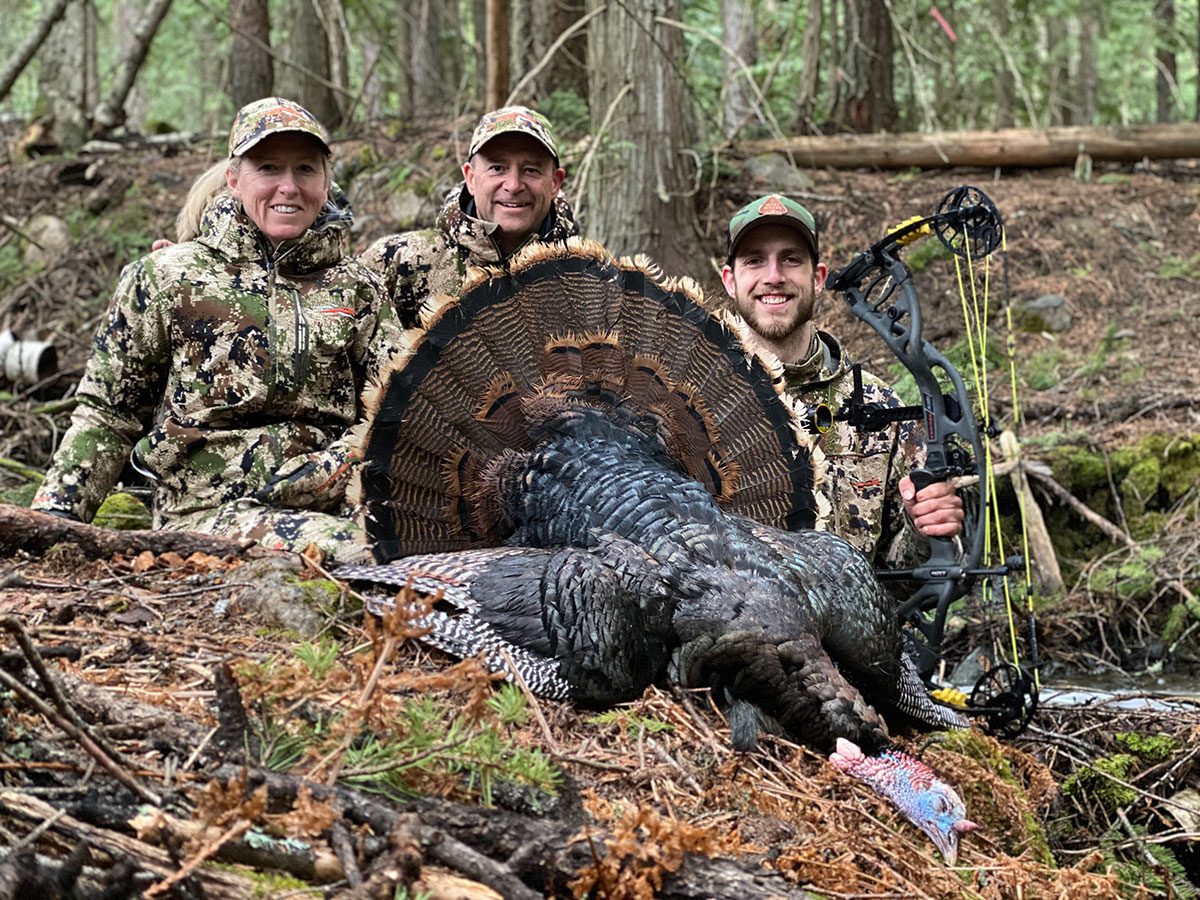
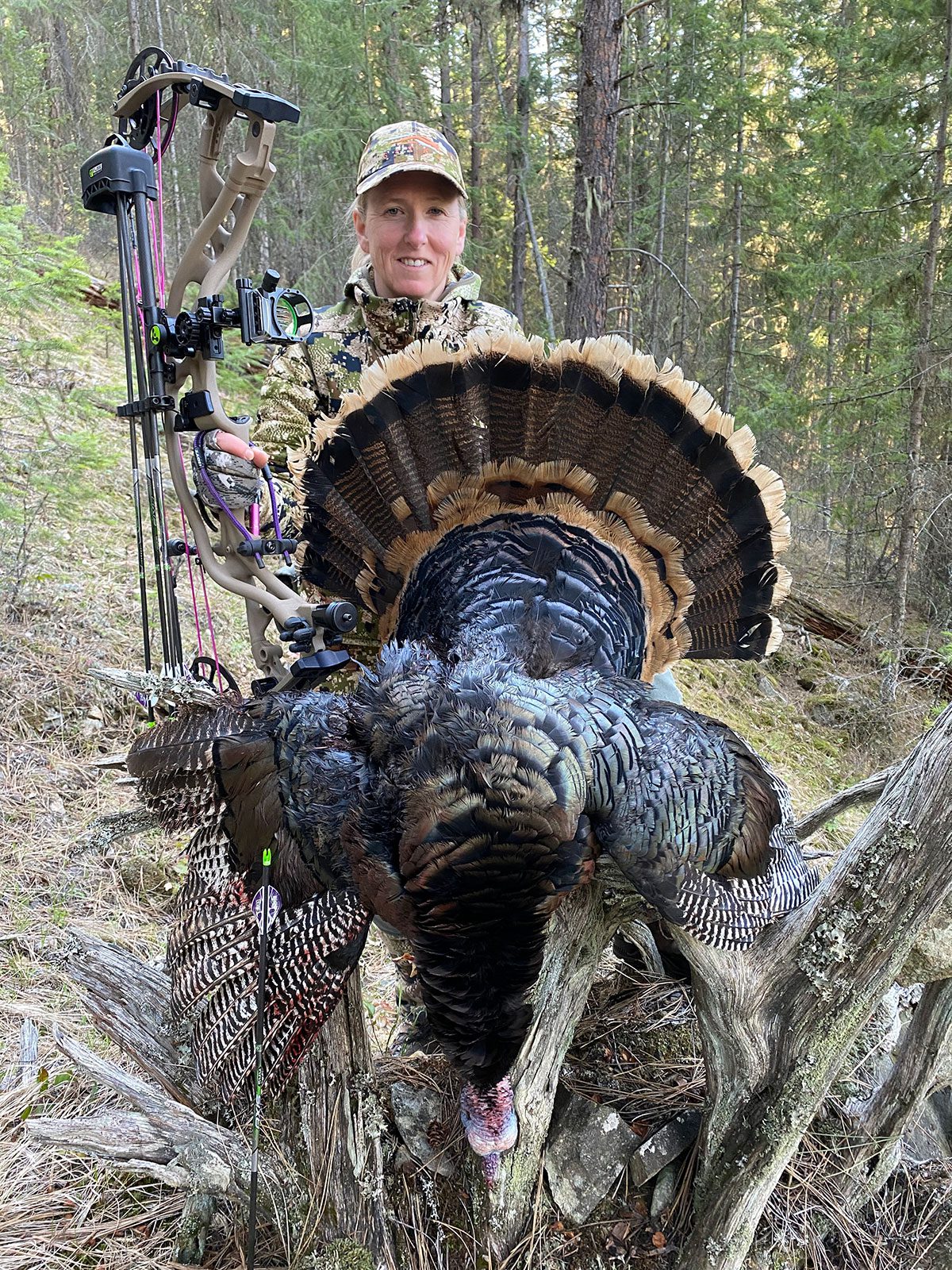
With turkey hunting, tenacity usually pays off, and this time it did. It was only a matter of time before we fired up a mid-mountain gobbler. Following 45 tense minutes of coaxing, he emerged from cover. Breaking from the trees, he immediately noticed our decoys, raced in, and began to strut. Positioned 20 yards apart, each hiding behind a massive pine tree, my wife and I both drew our bows the moment the gobbler fanned and turned to face away. At 18 yards, he was instantly greeted with a broadhead through the living room. Heather’s arrow launched first, and with a single hop, it was lights out as he tumbled down the steep hillside. In an instant, the woods were still, and all previously humbling interactions faded as distant memories. Four days and plenty of elevation finally paid off as Heather raced over and proudly hoisted her bird into the air!
Turkey Hunting with a Bow Challenges Your Ability
Returning home from this hunt, I was reminded of both the challenge and exhilaration of outsmarting these mostly elusive birds. ‘Running and gunning’, much like we do hunting elk – in other words, calling, hiking, and climbing – as we hunt Merriam’s turkeys, we generally cover many miles and plenty of elevation in search of a willing Tom. Most days we get into turkeys, and killing birds with a shotgun would rarely be an issue, but bowhunting them, especially on foot, is a different game altogether. On this particular hunt, unseasonable heat and the timing of our trip seemed to subdue the birds over our first three days. Most hens were already tending eggs, and the gobblers were mostly locked up with the hens that were still roaming. On day four, though, things turned on. In the pre-dawn darkness, a few subtle purrs, clucks, and yelps triggered a gobbling frenzy. With a new lease on life, we called several Toms to within archery range, but as bowhunting – and more specifically turkey hunting – goes, the keen eyes and hyper-awareness of these peculiar birds foiled set after set.

Tips for Turkey Hunting with a Bow
If you’re more accustomed to hunting turkeys with a gun but want to give it a go with a bow, allow me to offer a few quick tips for gearing up and setting up. Even if you’re a seasoned bowhunter in the turkey woods, I trust some of what I’m about to share will add to your pre-existing arsenal.
People often say turkeys are smart, and therefore tough to hunt. Indeed, they can school even the most veteran of hunters. Still, after 28 years in the turkey woods, I offer that wild turkeys simply have extraordinary eyesight, and that they are perhaps better described as schizophrenic. And, honestly, that’s what makes them so much fun to hunt!
Gear Considerations for Turkey Hunting with a Bow
Each spring’s annual turkey hunting marathon gives me a refresher course in finding birds, getting in close, placing decoys, calling, and of course, shot placement. As far as archery shots are concerned, know that a turkey’s kill zone is a small target. For this reason, accuracy and precision matter. First and foremost, make sure your bow and arrows are dialed in for accuracy. Many bowhunters leave their archery equipment alone over the winter. This is never a good idea, and you need to keep a careful eye on your bow setup and maintenance. Consistent practice will most often translate to success in the field when you’re shooting well during practice.
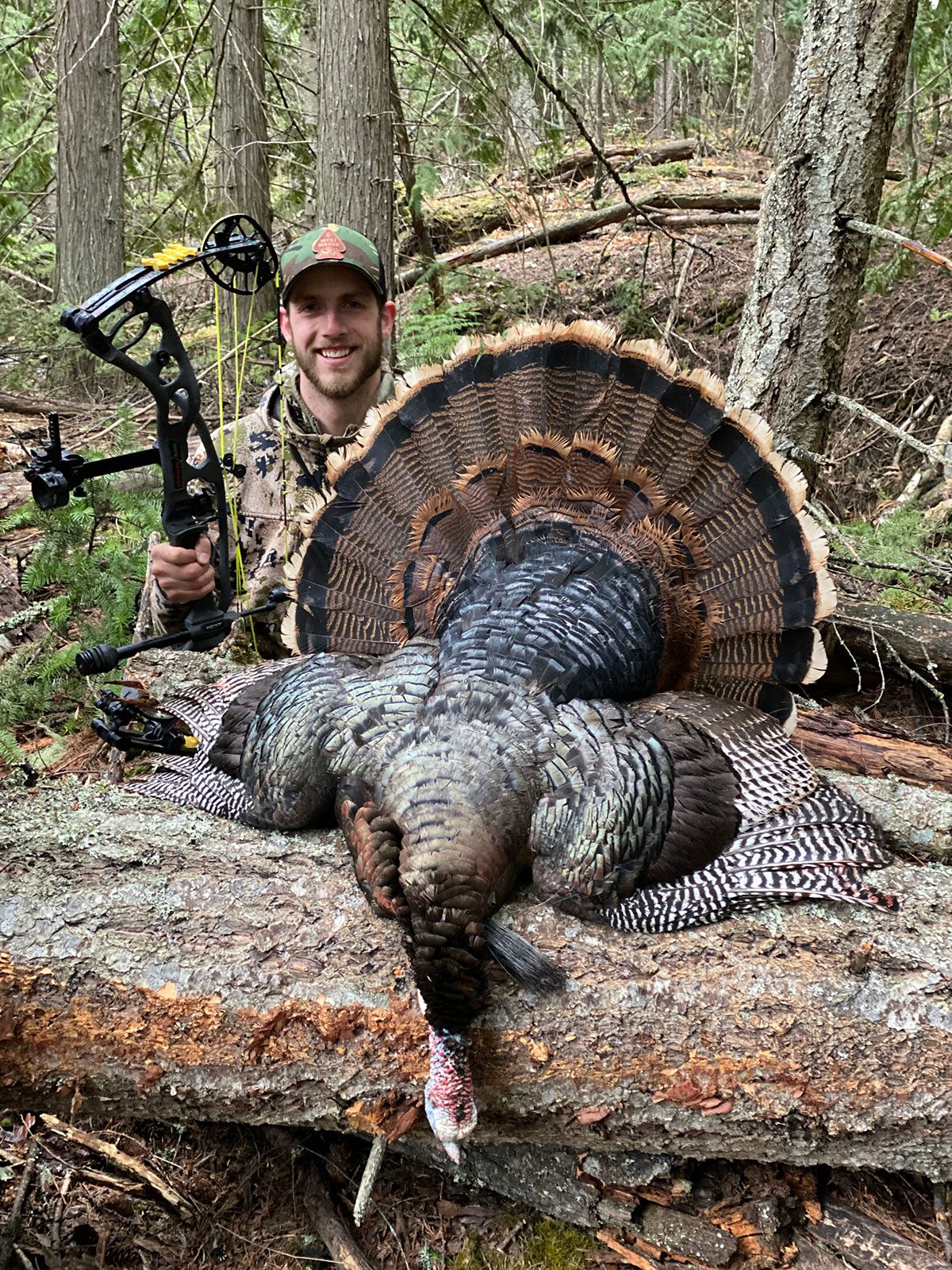
Broadheads for Turkey Hunting with a Bow
Any legal hunting bow can work for wild turkeys, and more hunters are opting to use crossbows than ever before. If you hunt with a crossbow, broadhead selection is a bit different than what we are covering here, but the principles are much the same. More important than poundage, or even the arrow you shoot, is the broadhead you use. Many years ago, I found one that I really like and continue to use today. It’s a Fuse turkey-hunting broadhead that’s unfortunately no longer in production. I’m not sure why they stopped making them, because they work great. Soon, I’ll have to change it up because I’ve only got two remaining in my quiver. Standard three-or-four-blade broadheads will do the trick with proper shot placement, but many bowhunters prefer using larger diameter tips like these:
Rage Extreme Turkey broadhead,
New Archery Products Spitfire Gobbler Getter,
Magnus Bullhead Fixed broadhead.
Decoys for Turkey Hunting with a Bow
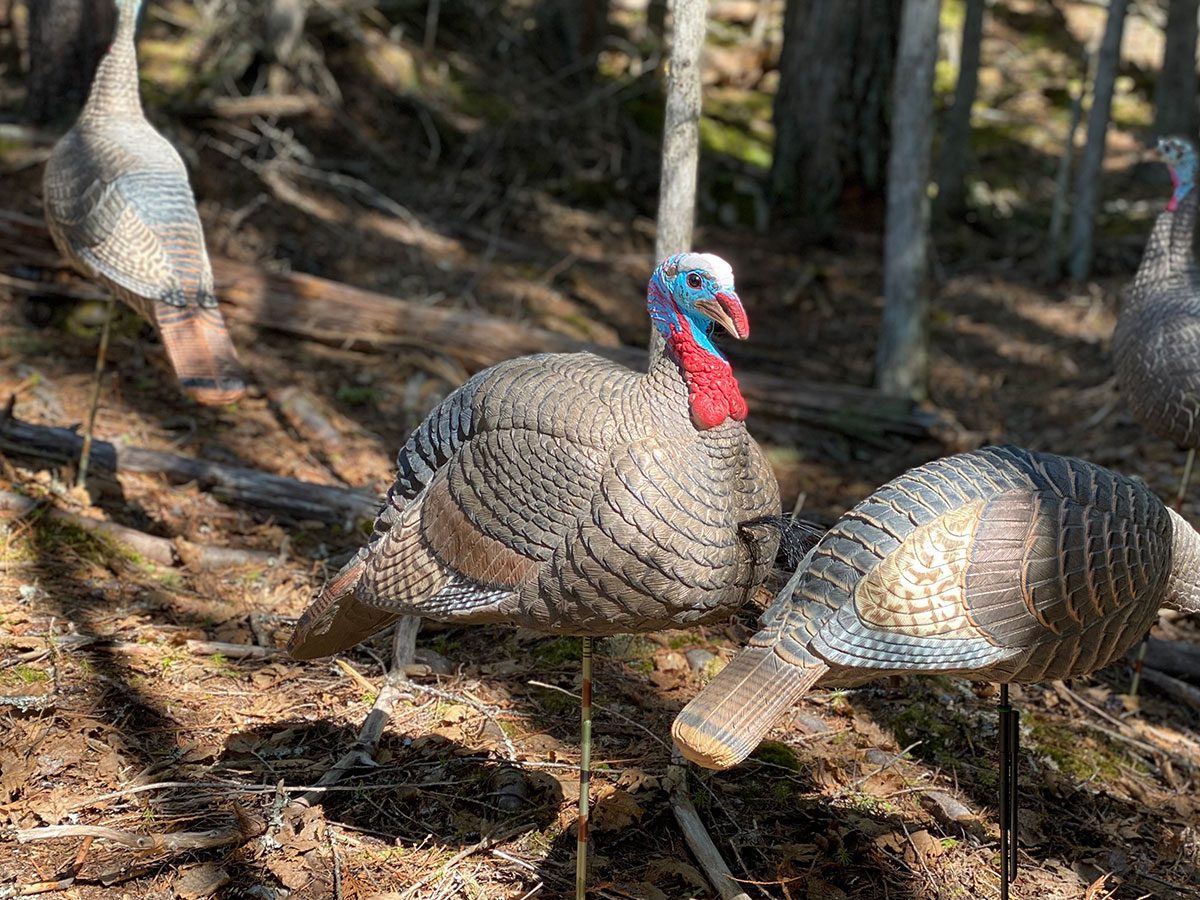
Decoys matter. As far as calls and decoys go, HS Strut products have always worked well for me, and I’m becoming a big fan of Avian-X turkey decoys now. The realism of their poses and detail in each decoy is remarkable. Regardless of your personal choice, realism is key. Employing a single jake along with two or three hens tends to work well in most situations.

Calls & Calling
Getting a turkey to give up his location is half the battle. Diaphragm, slate, and box calls all work, but the key is in the pitch, cadence, volume, and the type of calls you use to evoke a shock gobble. Over the years, I’ve discovered an inventory of calls that work well for me, including a roster of purrs, clucks, and yelps. Less is often more, as is volume, but sometimes the opposite is true. Again, much like elk hunting, when you finally get a gobbler cranked up, match his energy, and you’ve got a good chance of drawing him in on a string.
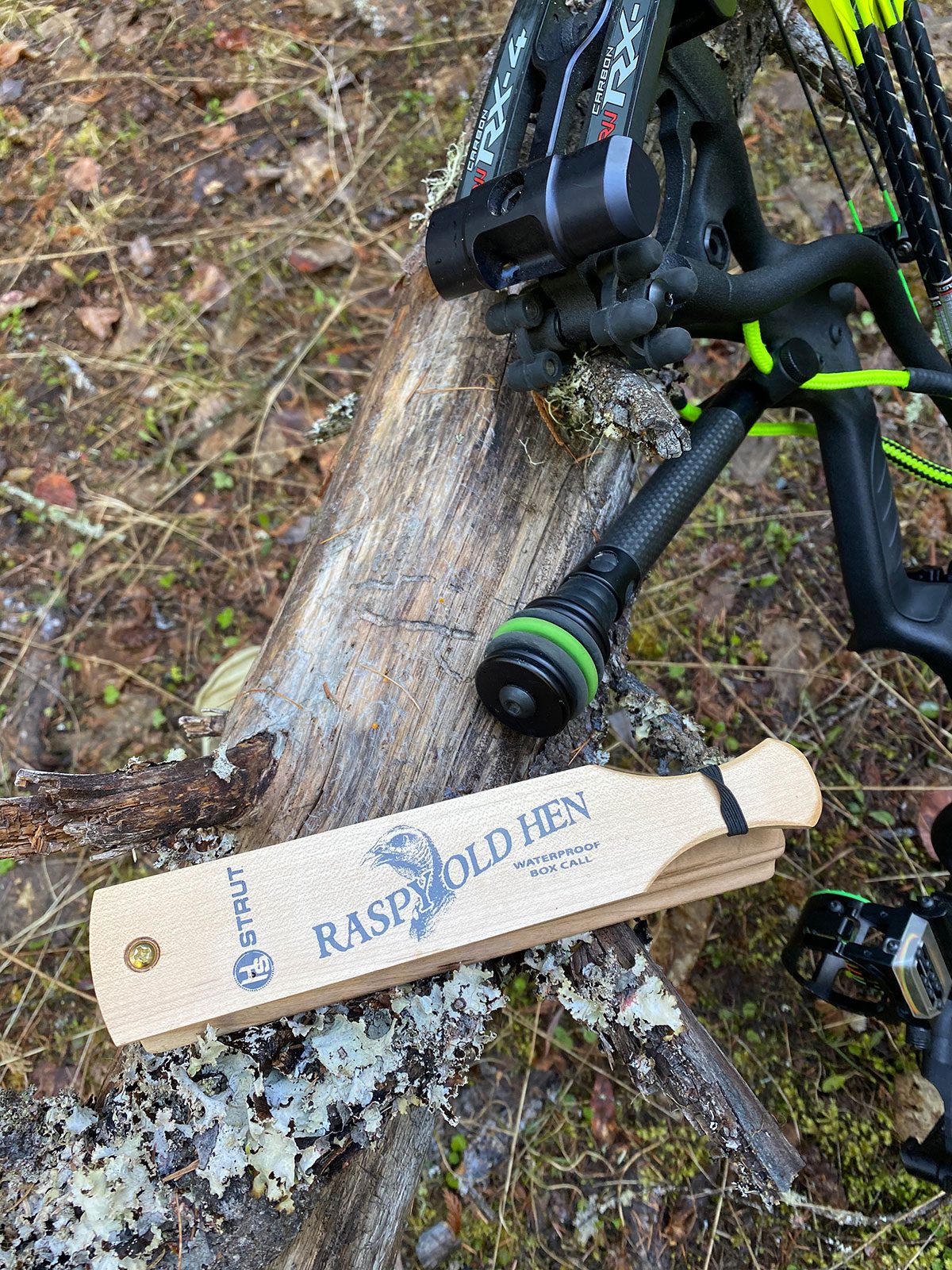
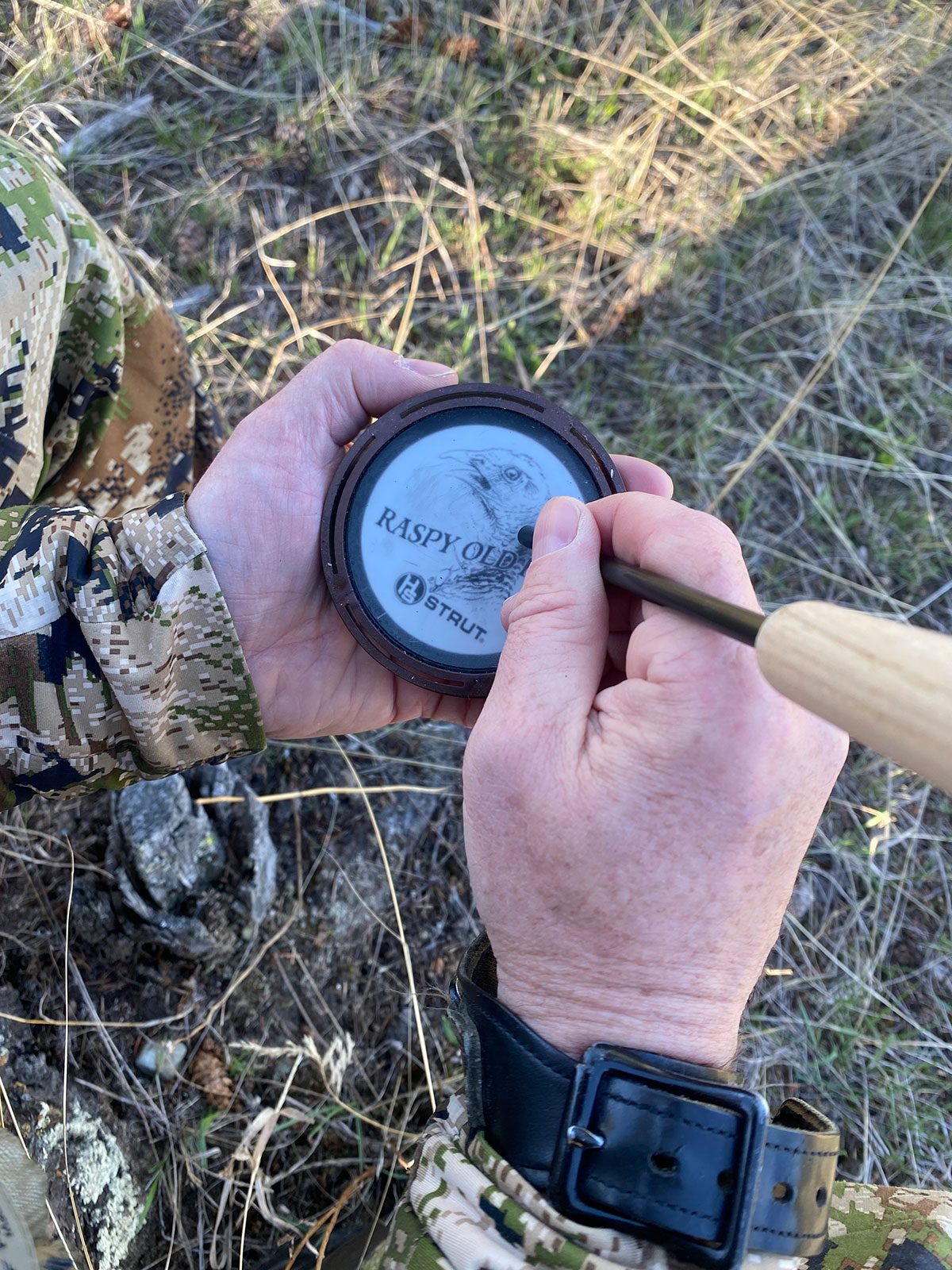
I use a variety of different box calls made by HS Strut, and I have an old Zinks box call I really like as well. Each of these has brought in many birds to bow range over the years. Similarly, I have an assortment of slate and diaphragm mouth calls as well. Each has its application. More important than the type of call you choose is learning how to use it well. As a baseline, practice developing a series of six to eight yelps starting with a bit quieter sound and slower cadence, then build up to a crescendo of louder and shorter yelps. When birds hang up out of range or seem reluctant to come in, adding in a few sporadic purrs and putts, clucks, and even spitting and drumming (best done with a diaphragm mouth call), can push them over the edge and draw them in closer. Once you have them gobbling and cutting off your hen calls, there’s a good chance they’ll come in. Keep them excited and vocal, and your odds of enticing them within bow range go way up. Check out this review of the best turkey calls.
Bowhunting Strategies
How we bow hunt Merriam’s turkeys depends a lot on where we’re chasing them. Essentially, four main strategies can work. These include hunting from a blind, spot and stalk hunting, walking and decoying while calling, and fanning.
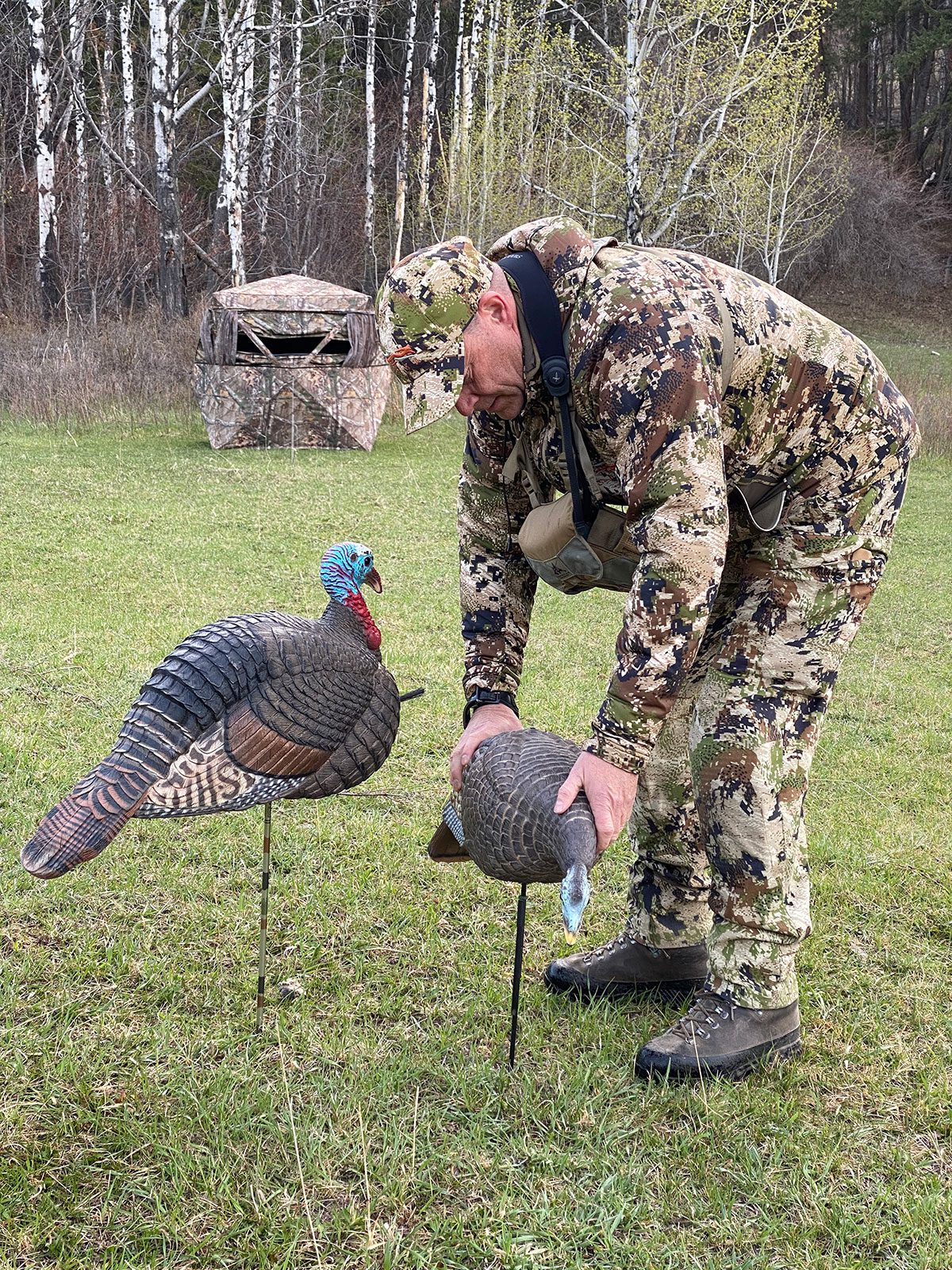
Certainly, the most common method employed by bowhunters is using a pop-up blind. Generally speaking, these big upland birds aren’t blind-shy, so an inanimate hunting hide serves to conceal movement, allowing archers to draw their bow undetected. Setting decoys 20-to-30 yards from the blind is a proven strategy that works well for many archers. The key here is placing a blind in known movement areas, often open pastureland or fields where turkeys hang out and feed. Once you pinpoint a consistent lingering area, ideally within a couple of hundred yards of a known roost, setting up a blind and leaving it in place for a few days, and then setting decoys and calling from the blind can be an effective strategy for drawing birds in close. Every Spring, plenty of turkeys are shot by bowhunters using portable blinds, like the Nukem Grab and Go.
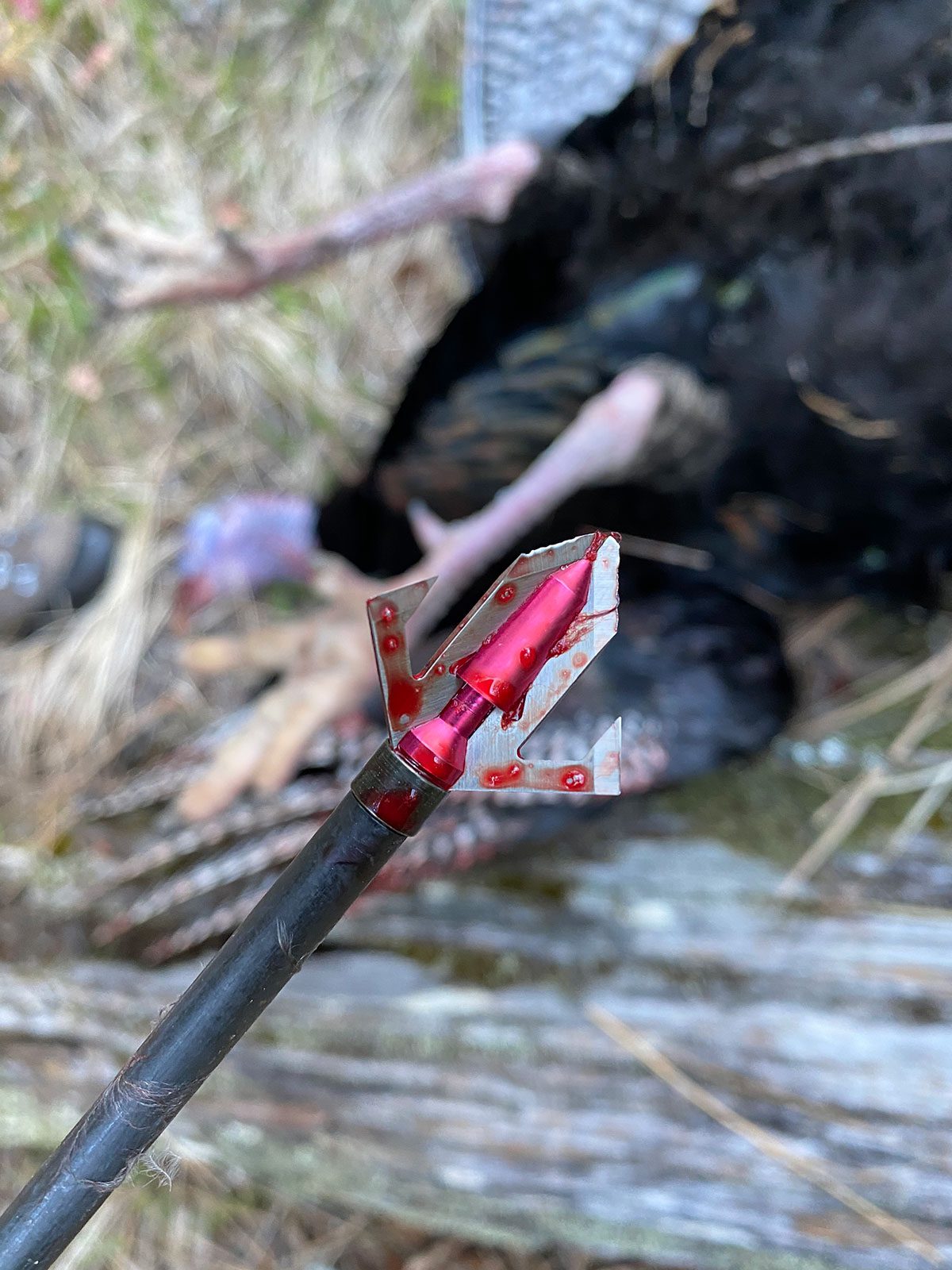
I know some bowhunters who spot and stalk turkeys with success. Much like locating and sneaking in on big game animals, the key is concealment. Using the lay of the land, trees, and other cover like drainages, and of course, conditions like wind to help conceal your approach can help a lot. The last time I did a spot and stalk turkey hunt, I snuck within 40 yards of three big Toms by quietly easing along a creek bottom, then popping up over the edge to take the shot.
All that said, my favourite method for bowhunting Merriam’s turkeys is walking and setting up with decoys and then calling. It’s a lot tougher to get an archery shot, but it’s far more exciting than sitting in a box blind. As I mentioned before, bowhunting wild turkeys is a lot like elk hunting. You often have to cover tons of ground before getting a vocal response, but when you do, it’s game on. Merriam’s generally roost high. In foothills or mountainous areas, that means up on ridges. Like other turkey subspecies, after flying down from their roost tree, they’ll work their way along those ridges or down into valleys during midday hours, then go back up to higher elevation in the evening. They may linger, feed, and breed in fields, but more commonly they remain under the protection of forested cover. Once I get a response to my calls, I move in and set up.
Setting Up Your Turkey Decoys
As far as set-ups go, I’m big on pushing in close. Not too close, mind you, but if cover allows, I like to get within 100 yards of where I think the Tom is hanging out. This requires caution, though. If he’s off the roost and fired up, moving in too close can get you busted. For archery hunting, hide behind available cover – things like big boulders, fallen timber, or bigger trees. Set your decoys 20-to-30 yards away and start calling. Place a jake decoy tight to one hen like he’s ready to mount her. Then space the other hens five or ten feet apart. Know that a possessive Tom will commonly focus on confronting the Jake decoy.
Fanning is another option for getting in close to wild turkeys. This involves hiding behind a turkey fan decoy – usually a more or less one-dimensional decoy that shows the front view of a gobbler in full strut. Hiding behind it, and carefully moving in on a Tom that’s working hens or preoccupied with other gobblers can get you within bow range. Be aware of the safety risks if there are other hunters in the area, though. Once you’re within bow range, pick your time to draw and shoot based on how distracted your target bird is.
Turkey Hunting with a Bow – Shot Placement
Turkeys have amazing eyesight, and they easily pick out even the most subtle movements. Wait until the bird is strutting and, if possible, facing the opposite direction before drawing your bow. This is especially important when you’re hiding behind something. In all situations, suitable camo clothing, including a facemask and gloves, helps a lot with concealment. Blending in with your surroundings never hurts.

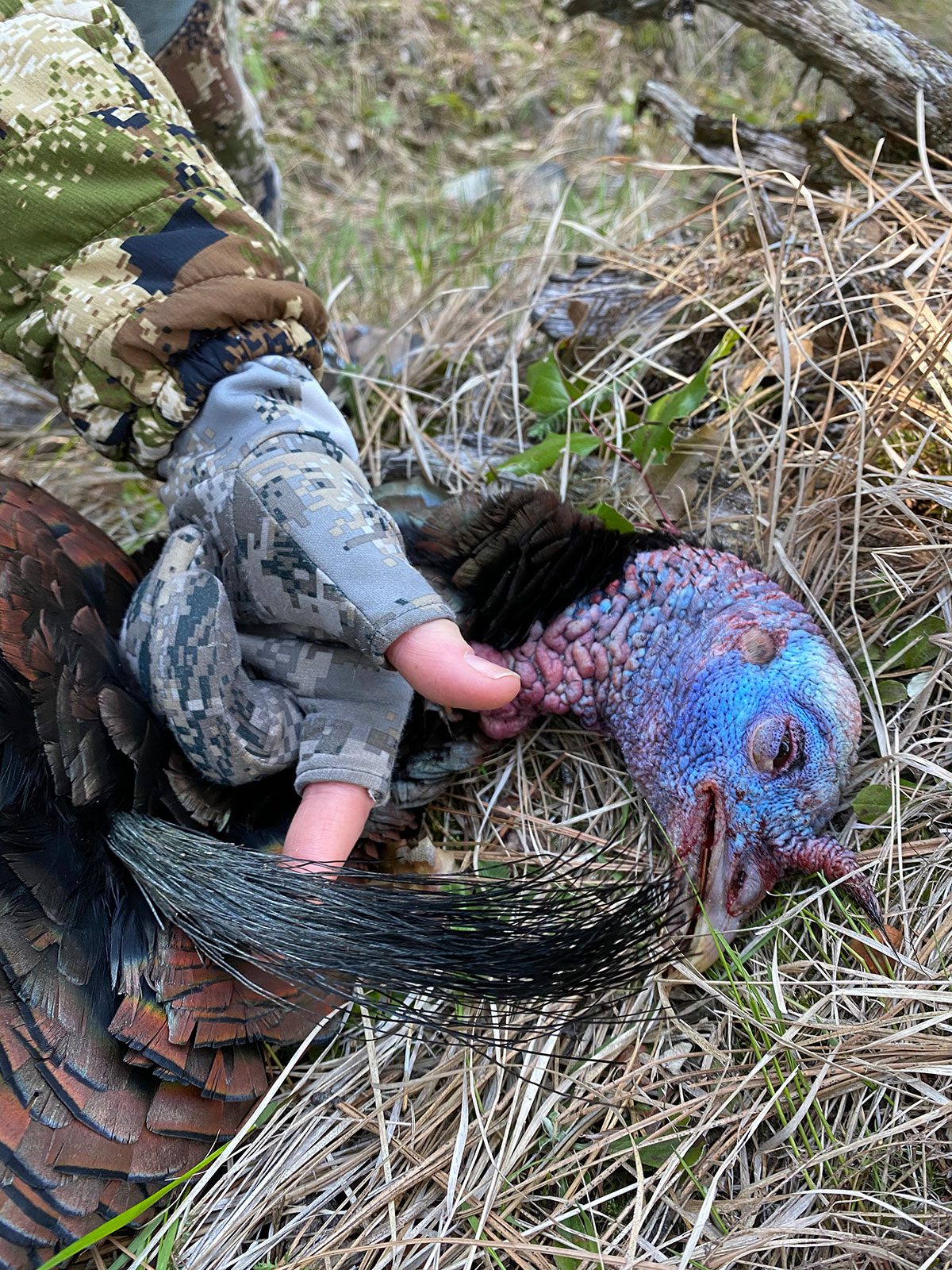
Remember, what you see when you look at a turkey is mostly feathers – especially a Tom in full strut. The actual kill zone is relatively small. Your goal is precise shot placement. Take time to browse the internet to study arrow placement for wild turkeys. Memorize where to shoot if the bird is facing you, standing broadside, and if it is facing away (especially if it’s strutting). With all those feathers, understanding anatomy will help you properly focus on lethal shot placement. Full disclosure – like many of us, I’ve been there – pillow casing a Tom, leaving nothing more than a pile of feathers on the ground, because I misjudged shot placement.
In the end, know that bowhunting wild turkeys is a challenge. Prepare properly, choose and use equipment that works, practice a lot prior to your hunt, and success will follow.
FAQ: Turkey Hunting with a Bow
Is turkey hunting with a bow harder than using a shotgun?
Yes. Turkeys have excellent eyesight, and drawing a bow without being seen is often the hardest part. Bowhunters need better concealment, closer setups and precise shot placement.
What is the best distance for shooting a turkey with a bow?
Most bowhunters should try to keep shots inside 20 to 30 yards, especially when using decoys. That distance gives you a better chance at a clean, accurate shot.
Do you need a blind to hunt turkeys with a bow?
A blind helps conceal movement and makes it much easier to draw undetected, but it is not required. Spot-and-stalk, fanning and mobile decoy setups can also work in the right terrain.
Where should you aim on a turkey with a bow?
Aim depends on the bird’s angle. Broadside, facing-away and strutting birds all require different aiming points because the kill zone is small and much of what you see is feathers.