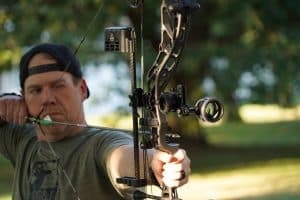





Few experiences match the excitement of participating in bowhunting tournaments – many sports fans compare it with following real-time events on a licensed betting site, where every move and decision keeps you on edge. Besides testing your shooting skills in competitive settings, this is also a great opportunity to connect with people who share your passion and commitment to mastering the bow. So whether you are a novice or seasoned archer, the following insights on different tournament formats and rules will help you prepare effectively.
Common Formats of Bowhunting Competitions
Bowhunting tournaments are typically held in the 3D archery format. To simulate real-world hunting scenarios, three-dimensional, life-sized animal targets are placed in natural settings (e.g., deep in the forest or partially hidden behind the obstacles). At the same time, they are strategically positioned at different angles, elevations, and distances to determine whether archers can adjust their shooting techniques accordingly. These targets are also made of foam or similar materials to mimic various game species as closely as possible. Such a type of tournament appeals to both amateur and professional archers, as well as seasoned hunters willing to improve their skills in controlled environments.
The International Bowhunting Organization (IBO) hosts the biggest competitive events, although you can also take part in tournaments held by the Archery Shooters Association (ASA), the National Field Archery Association (NFAA), and similar organizations.
Bowhunting tournaments come in several formats, whereas the most common ones include:
- Known-distance vs. unknown-distance events: in some competitions, the distance to the target is revealed right away. In others, archers must estimate it themselves, relying on their experience.
- Single-round vs. multi-round tournaments: many amateur or club-level events are held in a single round of 20-30 targets contested during one day. Larger tournaments typically consist of two or more rounds that take several days.
- Walk-through vs. station-style events: most bowhunting tournaments (especially 3D formats from IBO, ASA, and NFAA) use a walk-through format where small groups of archers move together from target to target, simulating a hunt. Some local or indoor events, in turn, opt for a station-style format that involves shooting from a fixed line while the targets are changed.
- Team vs. individual competitions: some tournaments focus on individual archers’ performance, while others allow participants to unite in teams (usually from 3 to 6 members) and combine their scores for an overall total.
Bowhunting Tournament Rules
Bowhunting tournaments combine precision shooting and competitive strategies. Even though the formats vary depending on the organizer and region, most events have a well-structured set of rules to ensure that the competition is fair. Here’s how bowhunting tournaments are regulated.
Targets and Scoring Areas
At the majority of official shooting events, 3D targets are set at marked or unmarked distances from 20 to 50+ yards. These targets have clearly defined scoring areas that represent the animal’s vital organs. To get the highest number of points, the archer needs to hit the smallest inner ring, but if the arrow is embedded within the larger vital area, they are awarded lower scores. Any hit outside the area brings minimal points, while complete misses result in zero. Check out how scoring works at the IBO-sanctioned shooting events:
- 11 points: 11 ring or “X” ring centered within the 10 ring
- 10 points: 10 ring or heart
- 8 points: vital area
- 5 points: body
- 0 points: miss
Scoring Systems
Most bowhunting tournaments have a cumulative point system. Every archer shoots a set number of targets per round, and their scores are recorded on official scorecards. At the end of the round, all the points are added together to determine the archer’s total score. In case there’s a tie, the winner is determined by the number of highest-value hits or through an additional shooting round.
Shooting Etiquette
Shooting etiquette is designed to keep bowhunting competitions safe and fair, and its violations can lead to penalties, disqualification, and even suspension of a hunting license. Depending on the tournament, you may be forbidden to:
- Draw a bow when you are not facing the target
- Point the bow in an upward direction when shooting (sky drawing is typically prohibited due to the dangers associated with equipment malfunctions)
- Distract others during their shots
- Discuss yardage until all arrows are scored
- Approach or retrieve arrows if other shooters in the group have not finished yet
- Touch the arrows before the scores are set
Equipment Needed for Participation in Bowhunting Competitions
Before registering for a tournament, it’s crucial to make sure that your equipment meets all the requirements. Although they vary depending on the organizer and division, the list of accepted gear typically includes:
- Bow (e.g., recurve, compound, or traditional, depending on your division)
- Arrows that comply with tournament specifications (correct diameter, weight, etc.)
- High-quality bowstrings
- Target tips (broadheads are often prohibited)
- Quiver for carrying arrows safely
- Protective gear (e.g., arm guards, finger tabs, and gloves)
- Basic bow maintenance kit
Practical Tips on Becoming a Successful Competitive Hunting Archer
Basic understanding of the sport and the right equipment are not enough to succeed in bowhunting tournaments. This path is filled with determination and continuous growth, when you not only hone your skills but also learn the wisdom from more experienced archers. With that in mind, the following tips can help you reach new heights on the competitive scene:
- Dedicate your time to regular training sessions, even during the off-season
- Focus on the quality of your shots rather than their quantity
- Invest in the gear that matches your shooting style and skill level – never rely solely on equipment to achieve success
- Join local bowhunting clubs or groups
- Connect with other archers through themed web forums to share experiences and learn shooting tricks
- Practice shooting from uneven terrain and unfamiliar angles to simulate different tournament conditions
- Analyze your performance after each competition and identify areas for improvement
- Maintain your equipment properly so that it serves you well during competitions
- Look for professional advice from knowledgeable archers or coaches
- Stay patient and trust the process, since success in competitive archery may take some time