




Most bowhunting conversations start and end with treestands. Climb higher, get more scent dispersal, get a better shooting angle, the logic goes. But treestands are not always the right call, and more bowhunters are quietly building a ground blind into their setup instead of treating it as a backup plan.
Ground blinds solve problems that treestands cannot. If you are hunting flat agricultural land with no trees worth climbing, a blind is often the only option. If you are hunting with a kid, a new shooter, or someone with a knee that does not love ladder stands anymore, a blind keeps everyone safer and more comfortable. And if the forecast calls for wind, rain, or a hard cold snap, sitting inside a blind instead of exposed on a platform can be the difference between finishing the sit and climbing down at noon.
The tradeoff bowhunters worry about is visibility and shot windows. A boxy, opaque blind can feel like hunting from inside a closet, and fumbling with a zippered window at the wrong moment has cost more than one hunter a shot. That is really a gear problem, not a ground blind problem, and it comes down to choosing the best hunting blind for how you actually hunt rather than grabbing whatever is cheapest at the store.
What Actually Matters in a Bow-Friendly Blind
A few features separate a blind that helps your bow season from one that gets left in the garage after one frustrating sit.
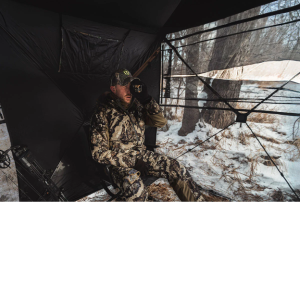

See-through visibility. Older blinds force you to shoot through a small mesh window or peel back fabric, which means movement, and movement blows shots at close range. Newer designs use one-way see-through paneling across most of the interior, giving you a wide field of view in nearly every direction while staying fully concealed from the outside. For a bowhunter, that means you can track a deer’s approach without shifting your body until you are already at full draw.Silent operation. Sliding windows that move without a zipper’s rasp, and a door that closes with hook-and-loop instead of a metal zipper pull, matter more for bow range than they do for firearms. Deer inside twenty yards will pick up on sound a rifle hunter never has to think about.
Fast, simple setup. A blind you can pop up and stake down in a few minutes is a blind you will actually use for a quick evening sit over a food plot, not just for opening weekend when you have all day to fuss with poles.
Weather-worthy construction. A reinforced metal hub and sturdy corner construction keep a blind from collapsing in the wind, which matters most on exactly the days deer move best.
Setting Up a Ground Blind So It Actually Works
Buying the right blind only solves half the problem. Deer are used to seeing the same shapes in their environment every day, and a brand-new dark cube in the middle of a field will get noticed. Set your blind up at least a week or two before you plan to hunt it so deer have time to accept it as part of the landscape. Brush it in with natural vegetation from the immediate area rather than leaving it bare, and stake it down tight so it does not shift or flap in wind.
Placement matters as much as the blind itself. Position it downwind of the trail or field edge you expect deer to use, and think about the sun. A blind facing east at first light can silhouette you against a bright interior if the sun is behind the deer’s line of sight into the mesh. Walk out to where you expect a shot and look back at the blind before you commit to a spot.
Inside the blind, treat it like a stand, not a living room. Keep gear organized and within reach, keep your bow ready rather than leaned in a back corner, and practice drawing from a seated position beforehand, since the angle and lack of elevation both affect your form more than most hunters expect.
A Compact Option Worth Knowing About
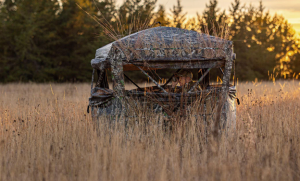
For hunters who move between spots rather than running one permanent setup, a lightweight blind tent built for two or three hunters hits a useful middle ground. It is small enough to carry in on foot and pop up in minutes, but roomy enough inside to shift position, hold gear, and bring a kid or hunting partner along without feeling cramped. That combination of portability and interior space is exactly what makes ground blinds practical for run-and-gun style hunts rather than just fixed food plot setups.

Give It a Real Try This Season
Ground blinds carry a reputation as the fallback option, something you use when a treestand is not practical. Spend a season actually hunting from a good one, set up correctly and given time to blend in, and that reputation starts to look outdated. For open ground, bad weather, or hunts where comfort and concealment matter more than height, a blind can put you closer to deer than a stand ever will.