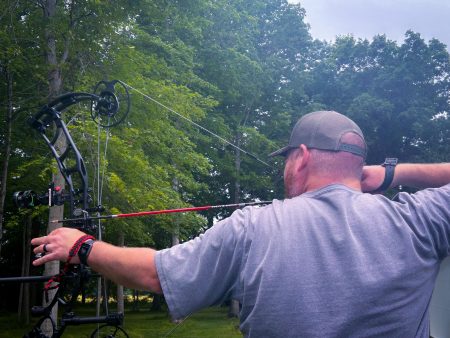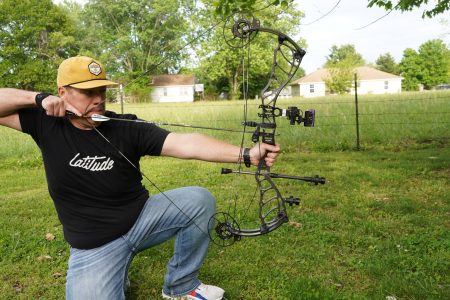
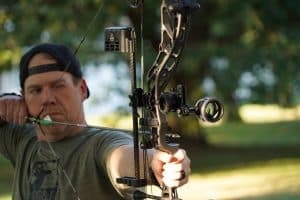





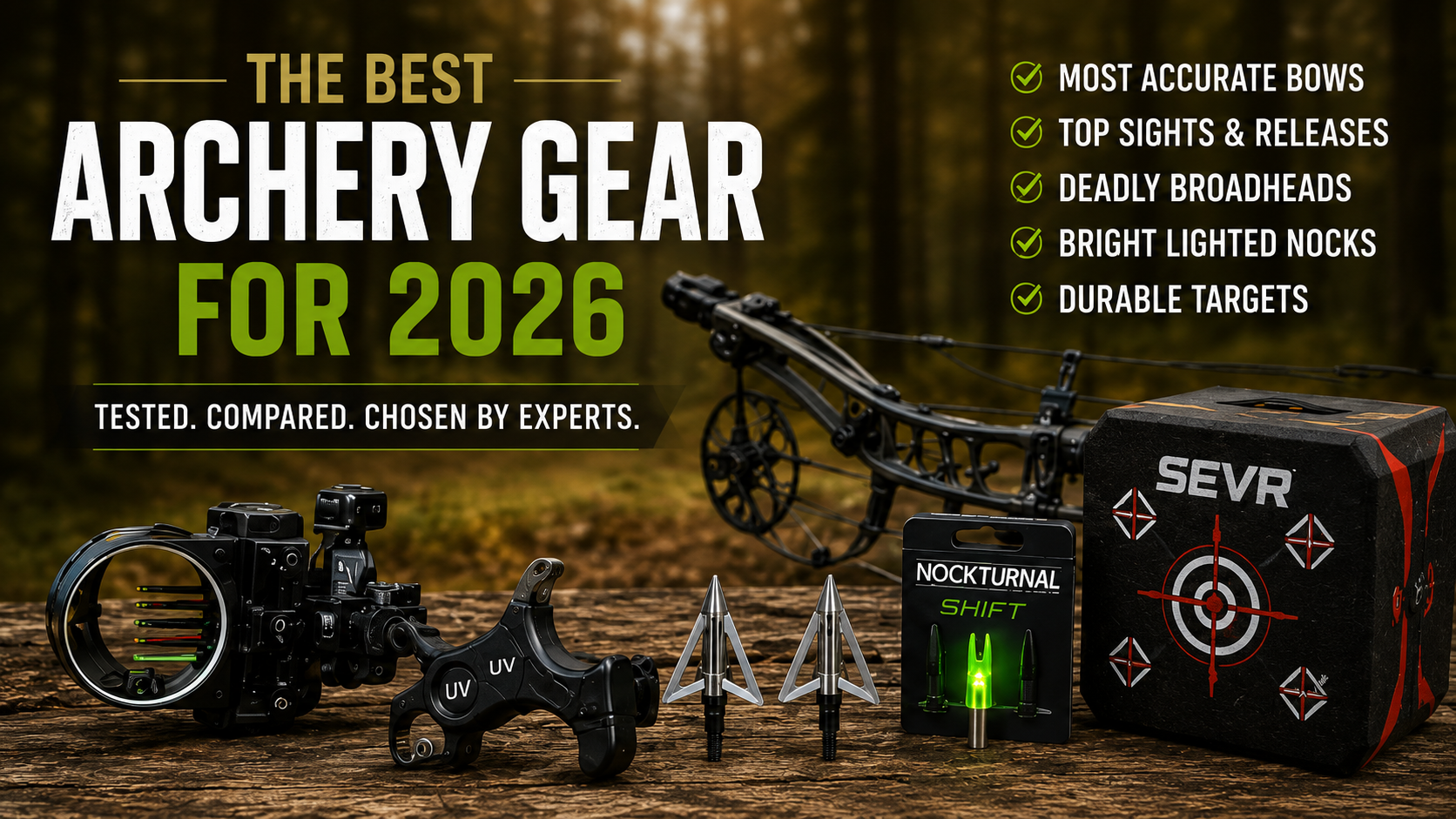
Modern archery equipment continues to become more accurate, adjustable, and specialized. Today’s bowhunters can choose from remarkably efficient compound bows, field-adjustable sights, highly tunable releases and broadheads capable of delivering dependable flight and penetration. The challenge is determining which upgrades will actually improve your setup—and which ones simply add cost. For this roundup of the best archery gear for 2026, we selected standout products from our hands-on reviews and comparative testing. We also considered field performance, adjustability, durability, ease of use, and overall value. Whether you are assembling a new hunting bow or improving an existing setup, these are some of the best archery products to consider in 2026. Please note that not all products are new for 2026; we took into account price and the overall fact that not everything newer is always better.
How We Chose the Best Archery Gear for 2026
This roundup draws on the combined experience of our outdoor media network, which includes four hunting and outdoor publications and a team of 37 writers, editors and subject-matter experts, and not just my opinions.
Rather than relying on just my opinion, we reviewed product testing, field experience, and recommendations from contributors with backgrounds in bowhunting, competitive archery, equipment setup, and outdoor product evaluation. We also compared findings from previously published reviews and buyer’s guides across our publications.
Products were evaluated based on factors such as:
- Accuracy and consistency
- Build quality and durability
- Adjustability and ease of tuning
- Performance in hunting conditions
- Practical value for the intended user
- Feedback from experienced archers and bowhunters
Our category winners were selected based on where each product performed best, whether that was accuracy, portability, adjustability, broadhead performance or overall versatility.
The result is a roundup informed by a broad group of experienced outdoor professionals rather than a single review or manufacturer specification sheet.
Best Archery Gear at a Glance
| Category | Our Pick | Best For |
|---|---|---|
| Best Overall Compound Bow | Bowtech Alliance 33 | Versatile hunting and 3D use |
| Best Smooth-Shooting Bow | Hoyt Alpha AX-3 33 | Quiet, controlled shooting |
| Most Accurate Compound Bow | Mathews Arc 30 | Accurate, smooth |
| Best Bow Sight | Spot-Hogg Boonie PM Triple Stack | Rugged hunting performance |
| Best Thumb Release | UltraView UV Button 2 | Adjustability and trigger feel |
| Best Lighted Nock | Nockturnal Shift | Visibility and dependable activation |
| Best Mechanical Broadhead | SEVR Titanium Series | Field-point-like flight |
| Best Fixed-Blade Broadhead | Muzzy Trocar | Durable, proven construction |
| Best Portable Practice Target | Morrell Big High Roller | Everyday backyard practice |
| Best Broadhead Target | SEVR 21 HD | High-volume broadhead shooting |
| Best Multi-Sided Target | BLOCK 6×6 PolyFusion | Multiple aiming faces |
Best Compound Bows for 2026
Best Overall Compound Bow: Bowtech Alliance 33
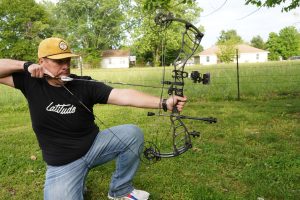

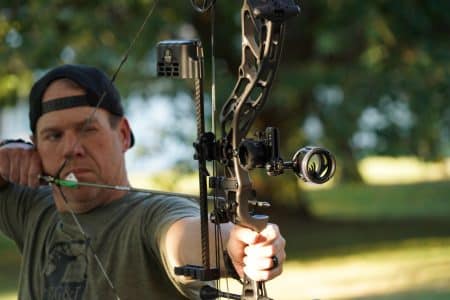
The Bowtech Alliance 33 earns our best overall designation because it balances speed, stability, adjustability and shootability without becoming overly specialized.
Its 33-inch axle-to-axle platform provides enough stability for longer shots while remaining manageable in a treestand or ground blind. The bow has an advertised IBO speed of up to 334 fps, a draw-length range of 27 to 32 inches and available draw weights ranging from 60 to 75 pounds.
Bowtech’s DeadLock Cam System is one of its most valuable features. Instead of requiring a bow press and repeated spacer adjustments, the system allows the shooter to move the cam position and correct tuning issues directly on the bow. GripLock technology also allows the grip angle to be adjusted to match the shooter’s hand position.
During testing, the Alliance 33 remained stable and predictable from ordinary whitetail distances out to 100 yards. It also produced minimal vibration and offered a comfortable draw cycle, particularly when set to Bowtech’s Comfort setting.
Why it stands out: The Alliance 33 can comfortably serve as a whitetail bow, western hunting bow and 3D setup. Its tuning system also makes it particularly appealing to archers who like working on their own equipment.
Read our complete Bowtech Alliance 33 review.
Most Accurate Compound Bow: Mathews ARC 30
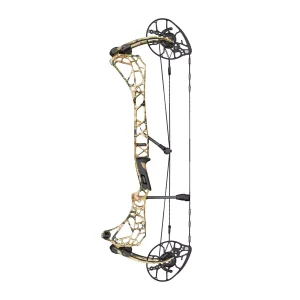

The Mathews ARC 30 earns our pick as the most accurate compound bow for 2026. Although accuracy ultimately depends on bow fit, tuning and shooter consistency, the ARC 30 provides an exceptionally stable and repeatable platform in a compact hunting bow.
At just 30 inches axle to axle, the ARC 30 is maneuverable enough for treestands, ground blinds and tight cover. What separates it from many other short bows is that it does not feel overly sensitive or difficult to hold on target. Mathews’ redesigned riser, limb geometry, and limb cups work together to improve stability throughout the draw cycle and the shot.
The flat-backed grip also promotes consistent hand placement. A repeatable grip reduces bow torque, which is one of the most common causes of left-to-right misses. Independent testing found that the grip encouraged deliberate, repeatable positioning, while the bow produced minimal noise and only brief handle movement after the shot.
The ARC 30 uses Mathews’ SWX-2 Cam with perimeter-weight technology. It offers an IBO speed rating of up to 348 fps, a 6-inch brace height and draw-weight options from 55 to 80 pounds. While it is certainly fast, the bow’s greatest strength is how controlled it feels at full draw. Its balance, solid aiming characteristics and minimal post-shot vibration make it easier to maintain pin movement and execute a clean release.
The compact dimensions also make the ARC 30 particularly well suited to whitetail hunters who need maneuverability without sacrificing downrange precision. Field & Stream’s testing similarly described it as lightweight, quiet and particularly well suited to whitetail hunting.
Best Bow Sight: Spot-Hogg Boonie PM Triple Stack
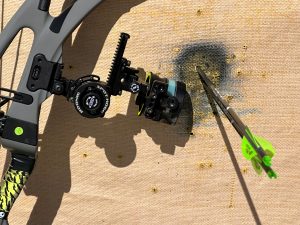

The Spot-Hogg Boonie PM Triple Stack is our top bow sight for hunters who value durability, precise adjustment and multiple aiming references.
The Triple Stack configuration uses three vertically aligned aiming pins. Each pin has its own yardage indicator, giving the shooter multiple fixed references while retaining the extended range of a movable sight.
The Boonie also includes first-, second- and third-axis adjustment, a large removable yardage wheel, tool-free windage adjustment and a smooth rack-and-pinion mechanism. Spot-Hogg’s interchangeable MRT rings help the sight housing match different peep sizes and lighting conditions.
Unlike more complicated multi-pin sliders, the vertical pin arrangement keeps the sight picture relatively uncluttered. Hunters can establish dependable references for common shot distances and then use the sight’s movable function when additional precision is needed.
Why it stands out: The Boonie PM Triple Stack offers an effective combination of fixed-pin speed and single-pin-style precision in an extremely rugged package.
See our complete guide to the best bow sights.
Shop the Spot-Hogg Boonie PM Triple Stack
Best Thumb Release: UltraView UV Button 2
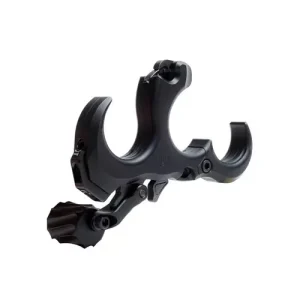

The UltraView UV Button 2 is a highly adjustable thumb-button release designed for archers who want precise control over trigger position and feel.
The second-generation model has a neck approximately 20 percent shorter than the original. This can improve alignment and help some shooters maintain more consistent draw length and anchor positioning.
The release allows the shooter to adjust trigger travel, trigger tension, thumb-bar position, and handle configuration. Locking screws help prevent the travel and tension settings from changing after they have been established.
Its finger grooves have also been refined, and the release is designed to share a similar handle profile with UltraView’s hinge release. That makes it easier for archers to move between thumb-button and hinge-style practice without dramatically changing their anchor or hand position.
The primary drawback is price. It is a premium release, and archers with particularly large hands may prefer a larger handle profile.
Why it stands out: The UV Button 2 provides a crisp trigger, extensive adjustability, and a handle system that can support both hunting and structured shooting practice.
See our complete guide to the best thumb releases.
Shop the UltraView UV Button 2
Best Lighted Nock: Nockturnal Shift
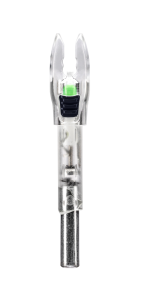

The Nockturnal Shift is our top lighted nock for 2026 because it combines excellent visibility with simple activation and deactivation.
Lighted nocks help bowhunters follow an arrow’s flight, identify impact location, and recover arrows after the shot. However, a poor-fitting or inconsistent nock can negatively affect arrow flight. The Shift performed accurately during testing while providing a bright, easy-to-track light.
An external on-and-off mechanism eliminates the need to insert a knife point or separate tool into the nock after each shot. Nockturnal also offers bushing options for several common arrow diameters, including .204-, .233-, .244- and .246-inch inside-diameter shafts.
The nock weighs approximately 25 grains, so archers should confirm their finished arrow weight and front-of-center balance after installing it. Practice with the same nock configuration that will be used while hunting.
Why it stands out: It is bright, durable, easy to operate, and available for many popular hunting-arrow diameters.
See our complete comparison of the best lighted nocks.
Best Mechanical Broadhead: SEVR Titanium Series

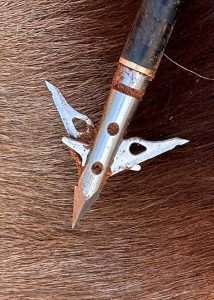
The SEVR Titanium Series was the strongest overall mechanical broadhead in our comparative testing.
SEVR broadheads use a rear-deploying Lock-and-Pivot blade system. The blades can pivot around bone rather than remaining rigidly fixed, potentially reducing blade damage and helping the broadhead continue penetrating.
One of the most useful features is SEVR’s Practice Lock. A small set screw prevents the blades from deploying, allowing the hunter to practice with the actual broadhead rather than relying exclusively on a separate practice head.
The Titanium Series is available in multiple cutting diameters, including 1.5-, 1.75- and 2-inch configurations. During testing, SEVR broadheads demonstrated excellent sharpness, durability and accuracy that closely resembled field-point flight.
As with any mechanical broadhead, hunters should match the cutting diameter to their bow’s energy, arrow weight and expected shot conditions. Larger cutting diameters generally require more energy to penetrate effectively.
Why it stands out: SEVR offers field-point-like accuracy, sharp blades and the ability to practice with the exact hunting head.
See the complete best broadheads test.
Shop SEVR Titanium Series broadheads
Best Fixed-Blade Broadhead: Muzzy Trocar

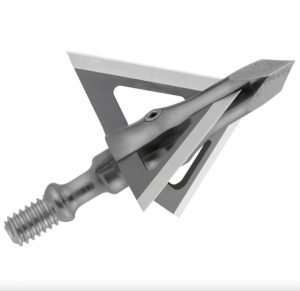
Hunters who prefer a fixed-blade design should consider the Muzzy Trocar.
The Trocar uses a compact steel ferrule, replaceable blades and a short overall profile intended to reduce the steering effect that can occur with larger fixed-blade heads. Its design has earned a strong reputation among hunters looking for an affordable, reusable broadhead with proven construction.
Our broadhead comparison selected the Trocar as the standout fixed-blade design. It provides the simplicity of permanently exposed blades without requiring the hunter to rely on a mechanical deployment system.
Fixed blades can reveal tuning issues that remain hidden when shooting field points. Before hunting, shoot the actual broadheads and make any necessary rest, cam, or arrow adjustments until the broadheads and field points group together.
Why it stands out: The Trocar offers durable construction, replaceable blades, and dependable performance at a relatively approachable price.
Best Archery Practice Targets for 2026
The correct target depends on what you intend to shoot into it. A target used primarily for field-point practice has different requirements than one expected to stop repeated broadhead shots.
Best Portable Target: Morrell Big High Roller
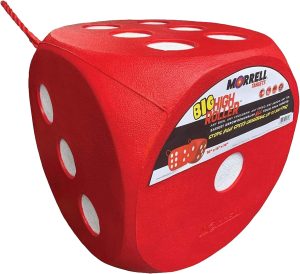

The Morrell Big High Roller is one of the most versatile targets for backyard archery practice.
Its six-sided cube design provides 21 aiming points, spreading wear across a much larger portion of the target. High-density, self-healing foam helps the target withstand repeated shooting, while the built-in carrying handle makes it reasonably easy to reposition.
Morrell rates the target for arrows traveling up to 500 fps, making it suitable for compounds and many crossbows. It can also accept both field points and broadheads, although frequent broadhead use will naturally shorten the life of any foam target.
Best for: Bowhunters who want one portable target for routine practice, broadhead confirmation and shots from different angles.
Shop the Morrell Big High Roller
Best Dedicated Broadhead Target: SEVR 21 HD
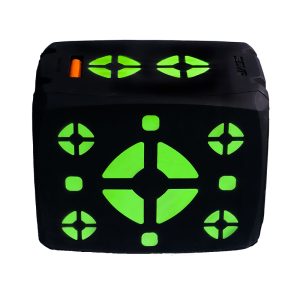
The SEVR 21 HD Archery Target is our preferred option for shooters who regularly practice with hunting broadheads.
Its 21-inch format provides a larger shooting surface than many portable cube targets. SEVR uses an easy-pull, high-density foam designed to stop broadheads while reducing the effort required to remove arrows.
The larger face is particularly useful when tuning fixed-blade broadheads or confirming long-distance groups. Those exercises can produce wider initial impacts than ordinary field-point practice, making the additional target area valuable.
The SEVR 21 HD was also one of the targets used during our comparative broadhead testing.
Best for: Serious bowhunters, broadhead testing, and high-volume hunting preparation.
Shop the SEVR 21 HD Archery Target
Best Multi-Sided Practice Target: BLOCK 6×6 PolyFusion
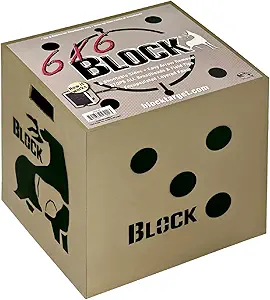

The BLOCK 6×6 PolyFusion is a strong choice for archers who want multiple aiming surfaces in a compact target.
The 18-by-18-by-16-inch target provides six usable sides, allowing the shooter to rotate it as individual aiming areas begin to wear. This makes it particularly useful for repetitive backyard practice, sight calibration, and shooting drills at several distances.
A multi-sided target also encourages archers to vary their point of aim rather than repeatedly shooting the center. That reduces concentrated wear and can extend the useful life of the target.
Best for: High-volume field-point practice and archers who want a compact target with multiple shooting faces. Stops arrows up to 400 FPS..
Shop the BLOCK 6×6 PolyFusion Target
How to Choose the Right Archery Gear
Start With Bow Fit
The best bow is not automatically the fastest or most expensive model. Draw length, draw weight, grip angle, valley, and overall balance will have a greater effect on practical accuracy.
Whenever possible, shoot several bows before purchasing. Pay attention to how each bow transitions into the valley, how firmly it holds against the back wall, and whether the grip naturally positions your hand without excessive torque.
Build the Setup as a System
A bow, sight, release, arrow and broadhead do not perform independently.
Changing release-aid length can affect draw length and anchor position. A heavier sight or stabilizer can alter the bow’s balance. Adding a lighted nock changes the arrow’s finished weight and front-of-center percentage. Switching from field points to broadheads can reveal tuning problems.
Make one meaningful change at a time and confirm the bow’s tune after installing new components.
Select the Sight for Your Hunting Style
A multi-pin or triple-stack sight is useful when animals may appear suddenly at several possible distances. A single-pin slider provides a cleaner sight picture but generally requires additional movement before the shot.
Hunters operating in thick woods may prioritize speed and simplicity. Western hunters may prefer a movable sight with precise yardage adjustment.
Practice With Your Hunting Components
Do not assume a broadhead will hit with field points simply because the packages list the same grain weight. Shoot the exact broadhead, arrow, lighted nock and release combination that will be carried into the field.
Mechanical broadheads should be checked for proper assembly and blade retention. Fixed-blade heads should be spin-tested to identify misaligned inserts, ferrules or arrow shafts.
Use the Correct Target
Field-point bag targets are excellent for high-volume practice but may be damaged by broadheads. Dense foam targets can handle broadheads, but repeated shots into the same area will eventually remove material.
Rotate cube targets regularly, use multiple aiming points and reserve at least one target for broadhead practice when possible.
Frequently Asked Questions
What is the best overall compound bow for 2026?
The Bowtech Alliance 33 is our best overall choice because it combines a stable 33-inch platform, broad draw-length range, manageable weight and user-adjustable DeadLock tuning system. The Hoyt Alpha AX-3 33 may be preferable for shooters prioritizing smoothness and quiet performance, while the PSE Mach 33 DS is the better choice for hunters wanting a lightweight carbon bow.
Are expensive bow sights worth the money?
A premium sight can be worthwhile when it provides more dependable adjustments, better axis calibration, stronger construction and clearer aiming references. However, it cannot compensate for poor bow fit or inconsistent shooting form. Hunters should prioritize durability and a pin configuration suited to their hunting environment.
Should bowhunters use a thumb release?
A thumb-button release can help create a more repeatable anchor and encourage a controlled shot when used correctly. It is not automatically more accurate than an index-finger release. Changing release styles may also alter effective draw length, so the bow’s fit and D-loop length should be checked after making the switch.
Should I practice with my hunting broadheads?
Yes. Every bowhunter should confirm broadhead impact before hunting. Even well-tuned mechanical broadheads should be tested, while fixed-blade broadheads may require additional tuning to group consistently with field points.
What kind of archery target lasts the longest?
Target life depends on arrow speed, point type, shooting volume and whether impacts are spread across the target. Multi-sided foam targets generally provide good longevity because they can be rotated. Dedicated broadhead targets are preferable for frequent broadhead shooting, while bag targets are often more economical for high-volume field-point practice.
Final Verdict
The best archery gear for 2026 is equipment that makes a bow easier to tune, more consistent to shoot and better suited to the hunter using it.
The Bowtech Alliance 33 is our most versatile compound bow, while the Spot-Hogg Boonie PM Triple Stack and UltraView UV Button 2 provide dependable control at the aiming and release stages of the shot. Nockturnal Shift nocks improve arrow visibility, and SEVR Titanium broadheads deliver an effective combination of accuracy, sharpness and practical testing capability.
Complete the setup with a target matched to your practice routine. The Morrell Big High Roller is the most versatile portable option, the SEVR 21 HD is best for serious broadhead work, and the BLOCK 6×6 provides multiple faces for everyday practice.
No individual accessory will replace proper bow fit, careful tuning and consistent practice. When the entire system works together, however, today’s best archery equipment can provide a noticeable advantage both on the range and in the field.